


 English
 русский
 Español
 عربى
عربى
Content
- 1 Understanding Magnetic Drive Pumps in Critical Applications
- 2 How Magnetic Drive Pumps Work
- 3 Key Advantages for Critical Process Systems
- 4 Safety Considerations and Risk Reduction
- 5 Reliability and Maintenance Implications
- 6 Energy Efficiency and Performance Factors
- 7 Cost Analysis: Initial Investment vs. Lifecycle Value
- 8 Comparison with Mechanically Sealed Pumps
- 9 Limitations and Design Constraints
- 10 Best Practices for Implementing Magnetic Drive Pumps
- 11 Are Magnetic Drive Pumps Worth the Investment?
Understanding Magnetic Drive Pumps in Critical Applications
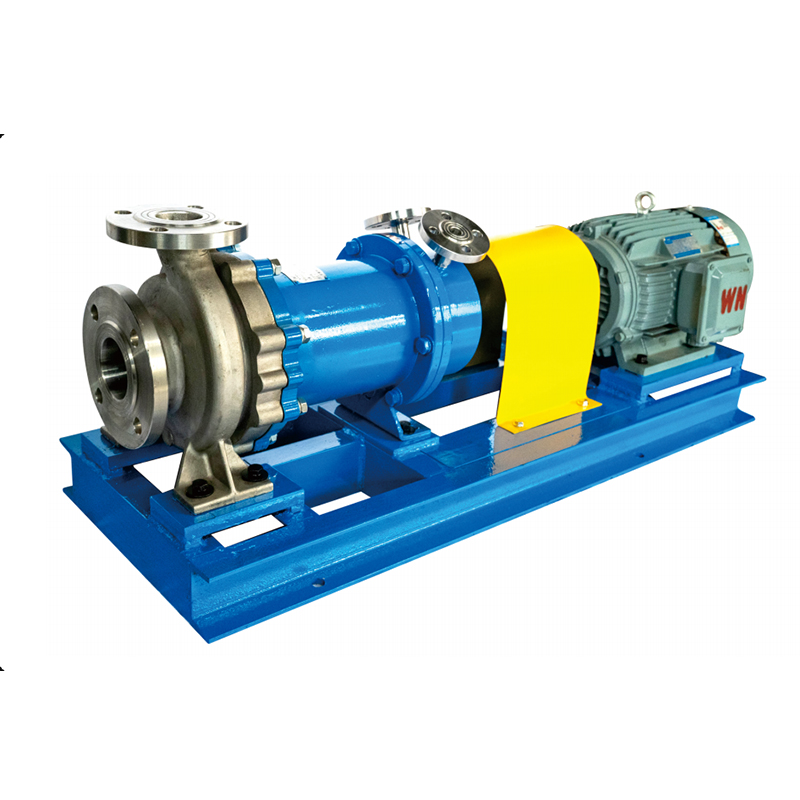
Magnetic drive pumps are a specialized type of centrifugal pump designed to eliminate the need for a traditional shaft seal. Instead of a direct mechanical connection between the motor and the impeller, torque is transmitted through magnetic coupling. This design makes magnetic drive pumps especially attractive for critical process systems where leakage, contamination, or safety risks must be minimized.
In industries such as chemical processing, pharmaceuticals, petrochemicals, and semiconductor manufacturing, even a small leak can result in significant operational, environmental, or regulatory consequences. As a result, the question is not simply whether magnetic drive pumps work, but whether they justify their higher upfront cost in demanding and high-risk environments.
How Magnetic Drive Pumps Work
The defining feature of magnetic drive pumps is the use of two magnet assemblies: an outer drive magnet connected to the motor and an inner driven magnet attached to the impeller. These magnets are separated by a containment shell that forms a pressure boundary, completely isolating the pumped fluid from the external environment.
Because there is no rotating shaft penetrating the pump casing, there is no need for mechanical seals. This seal-less design is the primary reason magnetic drive pumps are widely considered for critical process systems handling hazardous, corrosive, or high-purity fluids.
Key Advantages for Critical Process Systems
Magnetic drive pumps offer several operational advantages that directly address the risks associated with critical process environments. These benefits go beyond convenience and often align with safety, compliance, and long-term reliability goals.
- Zero external leakage due to seal-less construction
- Reduced risk of environmental contamination and operator exposure
- Lower maintenance requirements compared to seal-based pumps
- Improved compliance with strict safety and emissions regulations
For facilities operating under stringent regulatory oversight, these advantages can translate into measurable reductions in downtime, incident risk, and compliance-related costs.
Safety Considerations and Risk Reduction
Safety is often the primary driver behind the adoption of magnetic drive pumps. Traditional mechanical seals are a known point of failure, especially in systems handling aggressive chemicals or operating at elevated temperatures and pressures. Seal degradation can lead to leaks, fires, or toxic exposure.
By eliminating the seal entirely, magnetic drive pumps significantly reduce the likelihood of these incidents. This makes them particularly valuable in processes involving acids, solvents, flammable liquids, or fluids that pose health hazards. In critical systems where failure is not an option, this inherent safety advantage is difficult to overlook.
Reliability and Maintenance Implications
From a reliability standpoint, magnetic drive pumps remove one of the most maintenance-intensive components of a centrifugal pump: the mechanical seal. Seal replacement, alignment checks, and associated downtime are common issues in conventional pump systems.
However, magnetic drive pumps introduce other considerations. Internal components such as bearings and containment shells must be properly lubricated by the pumped fluid. Dry running or operation outside design limits can lead to rapid wear or catastrophic failure. As a result, proper system design and monitoring are essential to realizing the reliability benefits.
Energy Efficiency and Performance Factors
Magnetic coupling introduces a small efficiency loss compared to direct-drive pumps due to magnetic drag and eddy current losses. In many applications, this efficiency penalty is relatively minor, but it should be considered in energy-sensitive operations.
In critical process systems, energy efficiency is often balanced against safety and reliability. While magnetic drive pumps may consume slightly more power, the trade-off can be justified if it prevents unplanned shutdowns or costly leak-related incidents.
Cost Analysis: Initial Investment vs. Lifecycle Value
One of the most common objections to magnetic drive pumps is their higher initial purchase cost. Compared to sealed centrifugal pumps, magnetic drive models typically require a greater upfront investment due to specialized materials, precision manufacturing, and magnetic assemblies.
However, evaluating cost purely on purchase price can be misleading. Lifecycle cost analysis often reveals that reduced maintenance, fewer spare parts, and lower downtime can offset the initial expense, particularly in continuous or mission-critical operations.
Comparison with Mechanically Sealed Pumps
| Evaluation Factor | Magnetic Drive Pumps | Mechanical Seal Pumps |
| Leakage Risk | Essentially zero | Moderate to high over time |
| Maintenance Frequency | Low | Higher due to seal wear |
| Initial Cost | Higher | Lower |
| Suitability for Hazardous Fluids | Excellent | Limited with higher risk |
Limitations and Design Constraints
Despite their advantages, magnetic drive pumps are not suitable for every application. They are generally less tolerant of solids, dry running, and high-viscosity fluids. Inadequate system design can result in internal overheating or bearing failure.
Additionally, torque limitations of magnetic couplings can restrict their use in very high-power applications. Engineers must carefully match pump selection to process requirements to avoid performance issues.
Best Practices for Implementing Magnetic Drive Pumps
Successful use of magnetic drive pumps in critical systems depends on thoughtful implementation. Proper fluid compatibility analysis, adequate net positive suction head (NPSH), and reliable flow monitoring are essential.
Many facilities also integrate condition monitoring tools to detect temperature rise or abnormal vibration, helping prevent damage before it escalates into system failure.
Are Magnetic Drive Pumps Worth the Investment?
For critical process systems where safety, environmental protection, and reliability are top priorities, magnetic drive pumps are often worth the investment. Their seal-less design addresses one of the most common failure points in pumping systems, significantly reducing operational risk.
While the higher upfront cost may deter some buyers, the long-term benefits in reduced maintenance, improved safety, and regulatory compliance frequently justify the expense. When evaluated through a lifecycle and risk-management perspective, magnetic drive pumps represent a strategic choice rather than a simple equipment upgrade.

 Tel: +86-15256327373
  E-mail:
  Add: Anhui Southern Chemical Pump Co., Ltd. The intersection of Kaicheng Road and Fuxing Road, Jing Country, Xuancheng City, Anhui Province