


 English
 русский
 Español
 عربى
عربى
Content
- 1 Centrifugal Impellers Convert Rotational Energy into Fluid Pressure Efficiently
- 2 Three Primary Impeller Types and Their Applications
- 3 Key Design Parameters That Influence Performance
- 4 Material Selection for Durability and Corrosion Resistance
- 5 Cavitation: Causes, Detection, and Prevention
- 6 Performance Optimization Through Trimming and Speed Control
- 7 Manufacturing Methods and Quality Assurance
- 8 Selecting the Right Centrifugal Impeller for Your System
Centrifugal Impellers Convert Rotational Energy into Fluid Pressure Efficiently
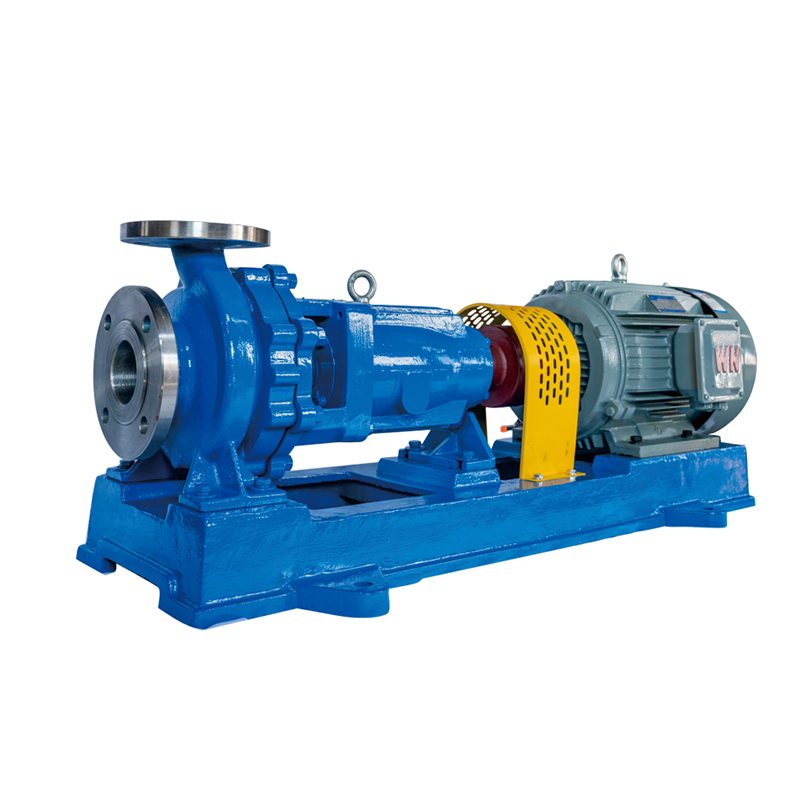
The centrifugal impeller is the heart of most centrifugal pumps, compressors, and blowers—transforming mechanical energy from a motor into kinetic and pressure energy in liquids or gases. As fluid enters axially through the eye of the impeller, rotating vanes accelerate it radially outward, where it discharges into a volute or diffuser that converts velocity into pressure. Modern designs achieve hydraulic efficiencies of 75–88% in well-matched systems, far surpassing positive displacement alternatives for high-flow, low-to-medium pressure applications. Their simplicity, reliability, and scalability make them indispensable in HVAC, water treatment, chemical processing, and power generation.
Three Primary Impeller Types and Their Applications
Centrifugal impellers are categorized by vane geometry: open, semi-open, and closed. Closed impellers feature front and back shrouds enclosing the vanes, offering highest efficiency (80–88%) and are standard in clean-fluid applications like water supply or refrigerant circulation. Semi-open designs (back shroud only) balance efficiency (70–80%) with tolerance for light solids—common in wastewater or pulp handling. Open impellers (no shrouds) sacrifice efficiency (55–70%) for maximum clog resistance, used in slurry pumps or sewage lift stations. A 2025 Hydraulic Institute study found that selecting the wrong type for slurry service increased wear rates by 3.2× compared to properly matched semi-open designs.
Key Design Parameters That Influence Performance
Impeller performance hinges on several geometric factors: inlet diameter, outlet diameter, vane angle (β₂), number of vanes, and specific speed (Nₛ). A larger outlet diameter increases head but reduces flow capacity; backward-curved vanes (β₂ < 90°) improve efficiency and reduce radial thrust, while forward-curved vanes (β₂ > 90°) boost flow at the cost of stability. Most industrial pumps use 5–7 vanes—fewer vanes increase passage size (better for solids) but reduce head consistency. Specific speed, a dimensionless index, dictates optimal impeller shape: low Nₛ (<500) favors radial flow (high head), while high Nₛ (>4,000) indicates axial flow (high volume).
Performance Trade-offs by Vane Configuration
- Backward-curved: High efficiency, stable power curve, ideal for constant-speed drives
- Radial vanes: Moderate efficiency, high head, used in boiler feed pumps
- Forward-curved: High flow, unstable power rise—requires VFD control
Material Selection for Durability and Corrosion Resistance
Impeller material must withstand fluid chemistry, abrasion, and cavitation. Cast iron suffices for municipal water but fails in acidic or saline environments. Stainless steel (304/316) is standard for food, pharma, and mild chemicals. For seawater or chlorine service, super duplex (e.g., UNS S32750) or nickel-aluminum bronze offers superior pitting resistance. In abrasive slurries, hardened alloys like CD4MCu or ceramic-coated aluminum provide extended life. Field data from a mining operation showed ceramic-coated impellers lasted 14 months versus 3 months for standard 316SS in tailings transfer pumps.
| Material | Max Temp (°C) | Corrosion Resistance | Typical Use |
|---|---|---|---|
| Cast Iron | 120 | Low | Clean water, HVAC |
| 316 Stainless Steel | 180 | High | Chemicals, food processing |
| Nickel-Aluminum Bronze | 200 | Excellent (seawater) | Marine, desalination |
Cavitation: Causes, Detection, and Prevention
Cavitation—the formation and collapse of vapor bubbles due to low local pressure—is the leading cause of impeller failure. It erodes vanes, creates noise, and reduces efficiency. It occurs when Net Positive Suction Head Available (NPSHa) falls below NPSH Required (NPSHr). Symptoms include gravel-like sounds, vibration spikes, and erratic flow. Prevention starts with proper system design: ensure adequate suction head, minimize pipe friction, and avoid operating far from BEP (Best Efficiency Point). Some impellers feature inducer vanes or polished surfaces to raise NPSHr tolerance. In a refinery case study, installing a 3% larger suction pipe reduced cavitation incidents by 92% over 18 months.
Performance Optimization Through Trimming and Speed Control
When system requirements change, impellers can be trimmed (reducing outer diameter) to lower head and flow per the Affinity Laws: flow ∝ D, head ∝ D², power ∝ D³. A 10% trim reduces power consumption by ~27%. Alternatively, variable frequency drives (VFDs) adjust motor speed—more efficient than throttling valves. However, excessive trimming (<80% of original diameter) distorts flow paths and drops efficiency sharply. ASME standards recommend limiting trim to 15% for closed impellers. Real-time monitoring of vibration, temperature, and power draw helps detect imbalance or wear before catastrophic failure.
Manufacturing Methods and Quality Assurance
Impellers are produced via casting (sand, investment, or die), CNC machining, or additive manufacturing. Investment casting delivers complex geometries with smooth surfaces—critical for hydraulic efficiency. Post-casting, vanes undergo balancing (ISO 1940 G6.3 grade typical) and hydrostatic testing. High-performance units may receive surface treatments like shot peening (to resist fatigue) or laser cladding (for erosion resistance). Leading OEMs like Sulzer and KSB use CFD-validated prototypes to ensure flow uniformity. A poorly balanced impeller running at 3,600 RPM can generate vibration amplitudes exceeding 7 mm/s—well above ISO 10816 limits for continuous operation.
Selecting the Right Centrifugal Impeller for Your System
Follow this practical checklist during specification:
- Define fluid properties: viscosity, solids content, pH, temperature
- Calculate required head, flow, and NPSHa—ensure margin above NPSHr
- Choose impeller type (closed/semi-open/open) based on cleanliness
- Verify material compatibility using corrosion charts (e.g., NACE MR0175)
Always request performance curves from the manufacturer—not just catalog ratings—and confirm third-party testing if used in critical service. When correctly selected and maintained, a centrifugal impeller can operate reliably for 10–20 years, delivering consistent hydraulic performance with minimal intervention.

 Tel: +86-15256327373
  E-mail:
  Add: Anhui Southern Chemical Pump Co., Ltd. The intersection of Kaicheng Road and Fuxing Road, Jing Country, Xuancheng City, Anhui Province