


 English
 русский
 Español
 عربى
عربى
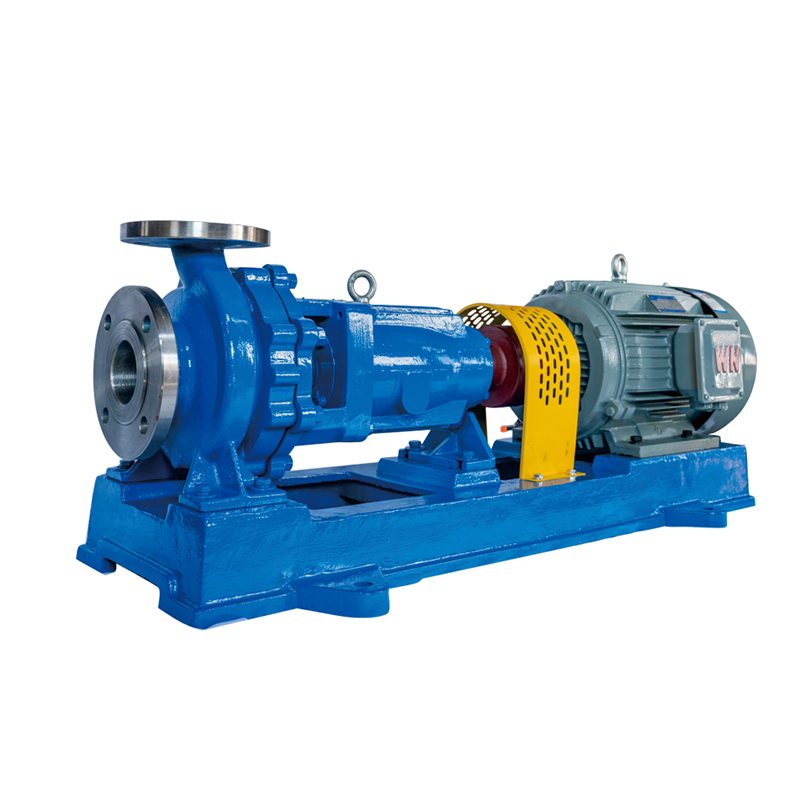
Centrifugal pumps and positive displacement pumps are fundamentally different in how they move fluids. Centrifugal pumps impart kinetic energy to liquids using a rotating impeller, while positive displacement pumps move fluid by trapping a fixed volume and forcing it through the outlet.
Understanding these differences is critical for selecting the right pump for industrial, agricultural, or commercial applications, as performance characteristics, efficiency, and maintenance requirements vary significantly.
Content
Working Principles of Centrifugal Pumps
Centrifugal pumps operate by converting rotational energy from a motor into kinetic energy in the fluid. The impeller spins rapidly, creating a low-pressure zone that draws liquid into the center and accelerates it outward through the volute casing.
These pumps are ideal for handling large volumes of low-viscosity fluids and are commonly used in water supply, HVAC, and chemical processing.
Flow and Pressure Characteristics
Centrifugal pumps provide a variable flow rate dependent on system pressure. They are most efficient near their best efficiency point (BEP) and can handle flows from a few liters per minute to thousands of cubic meters per hour.
Working Principles of Positive Displacement Pumps
Positive displacement pumps move a fixed volume of fluid for each rotation or stroke of the pumping mechanism, whether it is a gear, diaphragm, or piston. This ensures consistent flow regardless of system pressure.
They are suitable for viscous fluids, slurries, and applications requiring precise dosing or high-pressure output.
Pressure and Flow Control
Positive displacement pumps maintain nearly constant flow under varying pressures, making them ideal for metering applications. Flow can be adjusted by changing the pump speed or displacement volume.
Performance Comparison
Centrifugal pumps are generally more efficient at high flow rates and low to moderate pressures. Positive displacement pumps excel at high pressures and low flow rates, especially with viscous or shear-sensitive fluids.
| Characteristic | Centrifugal Pump | Positive Displacement Pump |
|---|---|---|
| Flow Rate | Variable, decreases with pressure | Constant, nearly independent of pressure |
| Pressure Capability | Moderate | High |
| Fluid Viscosity | Best for low viscosity | Handles high viscosity |
| Maintenance | Lower, fewer moving parts | Higher, more wear components |
Applications in Industry
Centrifugal pumps are widely used in water supply, HVAC systems, chemical processing, and irrigation, where large volumes of low-viscosity fluids must be moved efficiently.
Positive displacement pumps are preferred for food processing, oil and gas, chemical dosing, and handling high-viscosity fluids or abrasive materials, ensuring precise flow control.
Energy Efficiency and Operational Costs
Centrifugal pumps generally consume less energy at high flow rates but may require throttling or variable frequency drives to handle changing system demands efficiently.
Positive displacement pumps deliver predictable flow but can consume more energy at high pressures, especially if relief valves are used to manage overpressure.
Maintenance and Longevity Considerations
Centrifugal pumps have fewer wear parts, generally requiring less maintenance and providing long service life when operated near their BEP. Impeller wear and seal replacement are the primary maintenance items.
Positive displacement pumps experience more mechanical stress due to moving parts in contact with the fluid, requiring frequent inspection and replacement of gears, diaphragms, or seals.
Key Selection Criteria
Selecting between centrifugal and positive displacement pumps depends on fluid properties, required flow rate, pressure, and precision. High-volume, low-viscosity applications favor centrifugal pumps, while high-pressure, viscous, or metered flow applications favor positive displacement pumps.
Understanding the operational characteristics and performance limitations of each pump type ensures optimal energy efficiency, reliability, and service life for your application.

 Tel: +86-15256327373
  E-mail:
  Add: Anhui Southern Chemical Pump Co., Ltd. The intersection of Kaicheng Road and Fuxing Road, Jing Country, Xuancheng City, Anhui Province