


 English
 русский
 Español
 عربى
عربى
Content
- 1 What Is a Centrifugal Pump Impeller and Why Does It Matter?
- 2 Types of Centrifugal Pump Impellers
- 3 Key Parameters in Pump Impeller Design
- 4 Impeller Design Process: From Specification to Geometry
- 5 Material Selection for Centrifugal Pump Impellers
- 6 Cavitation in Centrifugal Pump Impellers: Causes and Prevention
- 7 Modern Advances in Pump Impeller Design
- 8 Selecting the Right Impeller: A Practical Checklist
What Is a Centrifugal Pump Impeller and Why Does It Matter?
A centrifugal pump impeller is the rotating component that transfers energy from the motor to the fluid being pumped. It works by accelerating fluid outward from the center of rotation using centrifugal force, converting mechanical energy into kinetic energy and then into pressure. The impeller is, in practical terms, the heart of any centrifugal pump — its geometry, material, and rotational speed directly determine pump efficiency, flow rate, and operating lifespan.
In industrial applications ranging from water treatment and chemical processing to HVAC systems and oil refineries, impeller performance can account for up to 80% of total pump efficiency. Selecting or designing the wrong impeller leads to energy waste, cavitation damage, and premature failure. Understanding impeller fundamentals is therefore essential for any engineer or procurement specialist working with fluid systems.
Types of Centrifugal Pump Impellers
Impellers are broadly classified by their geometry and the flow path they create. Each type is suited to specific operating conditions:
Closed Impeller
The closed impeller features shrouds (cover plates) on both sides of the vanes. This design offers the highest hydraulic efficiency among all impeller types, typically 75–90%, and is ideal for clean liquids. It is widely used in water supply, boiler feed, and general industrial service. The enclosed vane structure minimizes recirculation losses but makes it unsuitable for fluids carrying solids or fibrous material.
Open Impeller
Open impellers have vanes attached to a central hub with no shrouds. They are easier to clean and better suited for slurries, pulp, and fluids with suspended solids. Efficiency is lower (typically 60–75%) because the open design allows more recirculation, and performance is sensitive to the clearance between the vane tips and the pump casing. They are common in wastewater treatment and paper-pulp industries.
Semi-Open Impeller
Semi-open impellers have a back shroud but no front shroud. This is a balanced compromise: better efficiency than fully open designs while retaining the ability to handle moderately contaminated fluids. They are frequently chosen for chemical processing applications where the fluid may contain small solid particles or fibrous content.
Vortex Impeller
In vortex (or recessed) impellers, the rotating element is positioned away from the fluid flow path, creating a vortex that moves the liquid. These impellers handle large solids, rags, and highly viscous fluids without clogging. Efficiency is the lowest among common types (40–60%), but clog resistance makes them invaluable in sewage and municipal waste applications.
Key Parameters in Pump Impeller Design
Effective pump impeller design requires balancing several interdependent hydraulic and mechanical parameters. Each decision affects efficiency, reliability, and suitability for the intended service.
Specific Speed (Ns)
Specific speed is the foundational dimensionless parameter used to classify impellers and guide their geometry. It is defined as the rotational speed at which a geometrically similar impeller would deliver one unit of flow at one unit of head. Low specific speed (500–1500) corresponds to narrow, high-head radial flow impellers, while high specific speed (3000–10,000+) corresponds to wide, high-flow axial flow designs. Matching specific speed to the duty point is the first step in any impeller design process.
Impeller Diameter and Speed
The outer diameter of the impeller and its rotational speed together determine the tip speed, which governs the maximum head the pump can develop. The relationship follows the affinity laws: head varies with the square of speed, and flow varies linearly. Trimming the impeller diameter is a common field technique to reduce head without replacing the impeller — a 5% diameter reduction typically yields a 10% head reduction and reduces power consumption significantly.
Number and Geometry of Vanes
The number of vanes (typically 5–9 for radial impellers) affects both efficiency and net positive suction head required (NPSHr). Fewer vanes improve passage size for solid-handling but increase slip and reduce efficiency. More vanes improve guidance of the fluid, lowering slip and increasing head, but raise hydraulic friction. Vane angle at the outlet — typically set between 15° and 35° for backward-curved designs — determines the shape of the head-flow curve and has a direct effect on power consumption at off-design conditions.
Eye Diameter and Inlet Geometry
The impeller eye (inlet) diameter controls the velocity of fluid entering the impeller. If the eye is too small, inlet velocity becomes excessive and cavitation risk increases. If too large, pre-swirl and recirculation losses rise. Optimal eye sizing targets an inlet flow coefficient (phi) of 0.07–0.12 for most commercial pump designs. The inlet vane angle must also be matched to the flow angle at the design condition to minimize incidence losses.
Passage Width (b2)
The width of the impeller at the outlet (b2) determines the exit velocity component and influences efficiency and the pump's stable operating range. Wider passages suit high-flow, low-head duties; narrower passages suit high-head, low-flow applications. The ratio of b2 to outer diameter (b2/D2) typically ranges from 0.03 to 0.20 depending on specific speed.
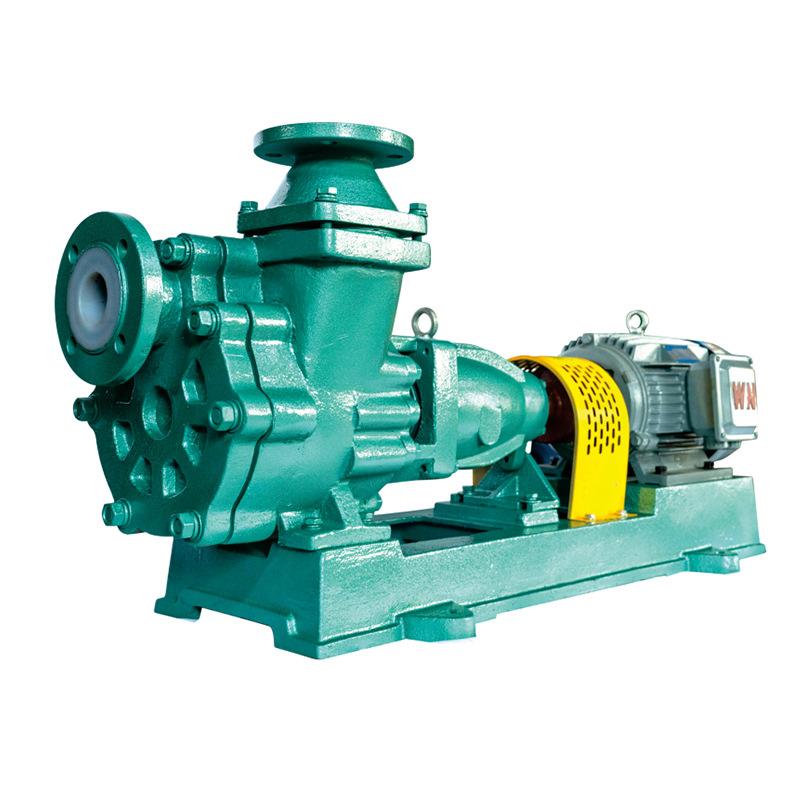
Impeller Design Process: From Specification to Geometry
A structured impeller design process ensures that the final geometry meets hydraulic requirements while remaining manufacturable and durable. The typical workflow includes the following stages:
- Define the duty point: Establish required flow rate (Q), total head (H), fluid properties (density, viscosity, solids content), and available NPSH from the system.
- Calculate specific speed: Use Ns to select the appropriate impeller type (radial, mixed-flow, or axial) and set general geometry targets.
- Preliminary sizing: Apply velocity triangles and empirical correlations (such as those from Pfleiderer or Stepanoff) to determine key dimensions — eye diameter, outlet diameter, outlet width, and vane angles.
- Vane layout and profiling: Generate vane centerlines using point-by-point methods or conformal mapping, ensuring smooth curvature without separation zones.
- CFD analysis: Run 3D computational fluid dynamics simulations (using tools such as ANSYS CFX or OpenFOAM) to validate head, efficiency, and pressure distribution across the operating range. Identify recirculation zones, cavitation risk areas, and off-design instabilities.
- Structural analysis: Perform finite element analysis (FEA) to verify that the impeller can withstand centrifugal stresses, pressure loads, and thermal effects at rated and maximum operating conditions.
- Prototype and testing: Manufacture and test a prototype against the pump performance curve, validating efficiency, NPSHr, and noise/vibration characteristics per ISO 9906 or HI standards.
Material Selection for Centrifugal Pump Impellers
The operating environment determines impeller material. No single material suits all applications. The table below summarizes common choices:
| Material | Typical Application | Key Advantage | Limitation |
|---|---|---|---|
| Cast Iron (ASTM A48) | Water, non-corrosive fluids | Low cost, good machinability | Corrodes in acidic or saline environments |
| Stainless Steel (316L) | Chemical processing, food & beverage | Excellent corrosion resistance | Higher cost, limited chloride resistance |
| Duplex Stainless Steel | Seawater, chloride-rich environments | High strength + pitting resistance | More difficult to cast and weld |
| High-Chrome White Iron | Abrasive slurries, mining | Outstanding wear resistance | Brittle, poor impact resistance |
| Bronze (C83600) | Marine, potable water | Good corrosion resistance, non-sparking | Dezincification risk in some alloys |
| PTFE / Engineered Plastics | Aggressive acids, ultrapure fluids | Chemical inertness, lightweight | Limited temperature and pressure range |
Cavitation in Centrifugal Pump Impellers: Causes and Prevention
Cavitation is the formation and violent collapse of vapor bubbles within the pump, typically at the impeller inlet where local pressure drops below the fluid vapor pressure. It is one of the most common and damaging phenomena in centrifugal pump operation, causing noise, vibration, erosion of impeller surfaces, and performance degradation.
The key design tool for avoiding cavitation is the Net Positive Suction Head Required (NPSHr). This value — determined by testing per ISO 9906 — represents the minimum suction head the system must provide to prevent cavitation at a given flow rate. Impeller design choices that reduce NPSHr include:
- Increasing eye diameter to lower inlet velocity
- Using a double-suction impeller to split inlet flow
- Adding inducer vanes upstream of the main impeller to pre-accelerate and condition incoming flow
- Optimizing inlet vane angle to minimize incidence losses at the design flow
- Applying surface finishing to reduce roughness and surface-tension-driven nucleation sites
Specifying a system NPSHa (available) with a margin of at least 0.5–1.0 m above NPSHr is standard practice and provides protection against operating at off-design conditions.
Modern Advances in Pump Impeller Design
Traditional impeller design relied on empirical correlations and 2D velocity triangle analysis. Modern design has been transformed by three key developments:
3D CFD-Driven Optimization
3D computational fluid dynamics is now integral to impeller development. Designers use parametric geometry models coupled with CFD solvers to run hundreds of design variants automatically, identifying configurations that maximize efficiency at the best efficiency point (BEP) while maintaining acceptable performance across the full operating range. Efficiency gains of 2–5 percentage points over traditionally designed impellers have been demonstrated in published optimization studies.
Additive Manufacturing
Metal additive manufacturing (3D printing in stainless steel, titanium, or nickel alloys) enables complex impeller geometries that are impossible to produce with conventional casting or machining. This includes fully three-dimensional twisted vanes, internal cooling channels, and topology-optimized structural forms. Lead times for prototype impellers drop from weeks to days. Additive manufacturing is particularly valuable for custom, low-volume, or high-performance pump applications in aerospace, subsea, and pharmaceutical industries.
Digital Twin Integration
Digital twin models — virtual replicas of physical impellers updated in real time with sensor data — allow operators to monitor impeller health, predict cavitation onset, and schedule maintenance before failure. Embedded vibration and pressure sensors feed data into physics-based models that track wear progression and efficiency degradation, reducing unplanned downtime and extending service life.
Selecting the Right Impeller: A Practical Checklist
When specifying or sourcing a centrifugal pump impeller, engineers should evaluate the following criteria systematically:
- Fluid characteristics: Clean liquid, slurry, corrosive acid, viscous material, or fluid with solids — each narrows the field of appropriate impeller types and materials.
- Duty point stability: If the pump will operate predominantly at a single steady flow, efficiency at BEP is paramount. If flow varies widely, a flat head-flow curve and broad efficiency band are more important.
- NPSH margin: Verify that NPSHa exceeds NPSHr by the required margin across all anticipated operating conditions, including startup and low-flow recirculation.
- Maintenance access: Open impellers are easier to clean and inspect; closed impellers are more efficient but require disassembly for internal inspection.
- Regulatory compliance: For food, pharmaceutical, and potable water applications, impeller materials and surface finish must comply with applicable standards (FDA, 3-A, WRAS).
- Lifecycle cost: A higher-efficiency impeller may have a higher initial cost but deliver substantial savings in energy over a 10–15 year operating life, particularly in continuous-duty applications.

 Tel: +86-15256327373
  E-mail:
  Add: Anhui Southern Chemical Pump Co., Ltd. The intersection of Kaicheng Road and Fuxing Road, Jing Country, Xuancheng City, Anhui Province