


 English
 русский
 Español
 عربى
عربى
Content
- 1 The Core of Centrifugal Pump Maintenance: Start with the Impeller
- 2 How Centrifugal Pump Impellers Work and Why They Wear
- 3 Types of Centrifugal Pump Impellers and Their Maintenance Implications
- 4 Centrifugal Pump Maintenance Schedule: What to Inspect and When
- 5 Identifying and Diagnosing Impeller Damage Before It Causes Failure
- 6 Impeller Repair vs. Replacement: Making the Right Call
- 7 Preventive Practices That Extend Impeller and Pump Life
The Core of Centrifugal Pump Maintenance: Start with the Impeller
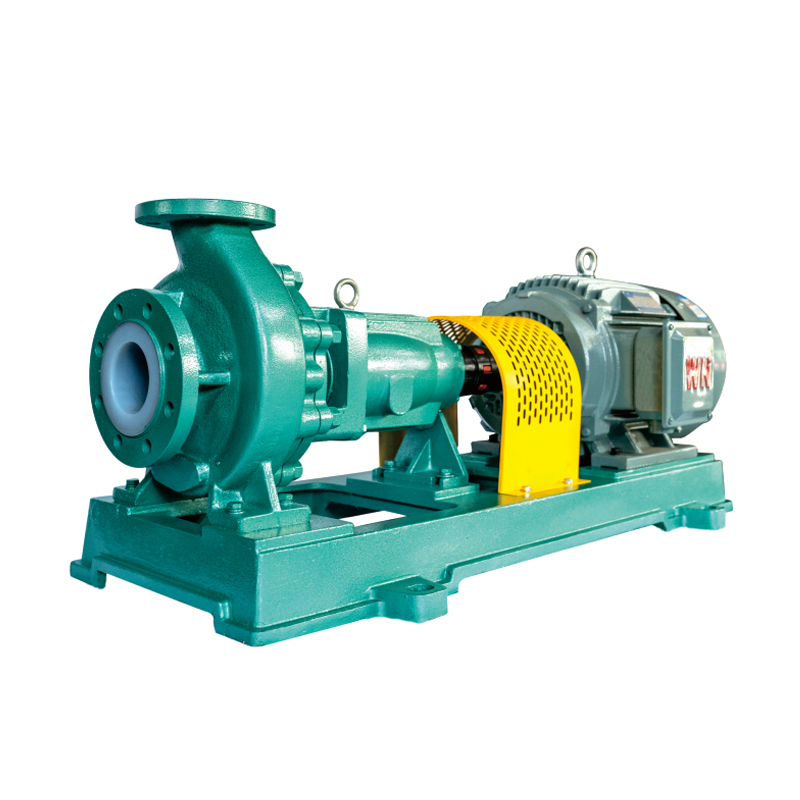
The impeller is the single most maintenance-critical component in a centrifugal pump. It is the only rotating part that directly contacts the pumped fluid, making it the primary site of wear, corrosion, cavitation damage, and imbalance — all of which degrade pump efficiency and shorten service life. A well-maintained centrifugal pump impeller can sustain 95%+ hydraulic efficiency for years; a neglected one can drop efficiency below 70% within months under demanding service conditions. Any serious pump maintenance program must treat impeller inspection and care as its foundation, not an afterthought.
How Centrifugal Pump Impellers Work and Why They Wear
A centrifugal pump impeller converts mechanical rotational energy into fluid velocity and pressure. As the impeller spins, fluid enters axially at the eye (center) and is flung radially outward by centrifugal force through curved vanes, exiting at higher velocity into the volute or diffuser where velocity is converted to pressure head.
This process exposes the impeller to several wear mechanisms simultaneously:
- Abrasive wear — caused by suspended solids (sand, grit, slurry) eroding the vane surfaces and shrouds
- Cavitation erosion — vapor bubbles collapsing near the vane leading edges, creating microscopic impact craters that progressively pit and roughen the surface
- Corrosion — electrochemical degradation in pumps handling acidic, alkaline, or salt-laden fluids
- Erosion-corrosion — a combined mechanism where fluid turbulence strips away protective oxide layers, accelerating metal loss well beyond either process acting alone
- Fatigue cracking — in high-speed or high-head applications, cyclic stress from pressure fluctuations can initiate cracks at vane roots or shroud welds
Research from the Hydraulic Institute shows that surface roughness increases of just 50 microns on impeller vane passages can reduce pump efficiency by 3–5%. In large industrial pumps consuming hundreds of kilowatts, that efficiency loss translates directly into significant energy cost and accelerated component fatigue.
Types of Centrifugal Pump Impellers and Their Maintenance Implications
Impeller design directly determines both performance characteristics and the type of maintenance attention required. The three main configurations each have distinct wear patterns and inspection priorities.
Closed Impellers
Closed impellers have vanes enclosed between a front shroud and a back shroud. They are the most efficient design — typically 2–5% more efficient than open impellers of equivalent size — and are standard in clean-fluid applications like water supply, HVAC, and chemical processing. Their maintenance challenge is the wear ring: a close-clearance fit between the impeller shroud and a stationary casing ring. As this clearance increases due to wear, internal recirculation grows and efficiency drops. Wear ring clearance should be checked at every major maintenance interval; standard clearance is typically 0.2–0.5 mm, and replacement is warranted when clearance doubles.
Open Impellers
Open impellers have no front shroud, exposing the vane faces directly to the casing or a back plate. They are used in applications with fibrous or viscous media, or where easy cleaning is needed. The critical maintenance parameter is the running clearance between the vane tips and the back plate — typically 0.3–0.8 mm. This clearance is often field-adjustable by moving the impeller axially on the shaft, making open impeller pumps more maintenance-friendly in some respects. However, vane tip wear is faster than in closed designs, requiring more frequent dimensional checks.
Semi-Open Impellers
Semi-open impellers have a back shroud but no front shroud. They represent a compromise: better efficiency than fully open impellers, and better handling of solids or stringy media than closed impellers. Slurry pumps and some wastewater applications favor this design. Maintenance focus is divided between vane wear on the exposed face and the condition of the back shroud, which is subject to recirculation-driven erosion on its rear face.
| Impeller Type | Typical Application | Primary Wear Site | Key Maintenance Check | Clearance Tolerance |
|---|---|---|---|---|
| Closed | Clean water, chemicals, HVAC | Wear rings, vane surfaces | Wear ring clearance | 0.2–0.5 mm |
| Open | Fibrous media, paper pulp | Vane tips, back plate | Vane-to-back-plate gap | 0.3–0.8 mm |
| Semi-Open | Slurry, wastewater | Vane faces, back shroud | Vane thickness, shroud condition | 0.4–1.0 mm |
Centrifugal Pump Maintenance Schedule: What to Inspect and When
Effective pump maintenance follows a layered schedule — daily observations, periodic measurements, and planned overhauls. Collapsing all maintenance into a single annual shutdown is one of the most common and costly mistakes in pump management.
Daily and Weekly Checks (Running Pump)
- Monitor bearing temperature — abnormal rises of more than 15°C above baseline indicate lubrication failure or misalignment
- Check vibration levels at bearing housings with a handheld analyzer; sudden increases in 1× or 2× running-speed frequencies often indicate impeller imbalance or cavitation
- Inspect mechanical seal faces or packing gland for excessive leakage (a small controlled drip from packing is normal; mechanical seals should show near-zero visible leakage)
- Verify suction and discharge pressures against baseline — a drop in differential pressure at constant speed is an early sign of impeller wear or internal recirculation
- Listen for unusual noise: crackling or popping sounds are a classic indicator of cavitation damaging the impeller eye
Monthly and Quarterly Checks
- Perform oil analysis on oil-lubricated bearing housings to detect metal particle contamination from internal wear
- Check coupling alignment using a dial indicator or laser alignment tool — thermal growth during operation can shift alignment significantly from cold-set readings
- Record motor current draw and compare to baseline — rising amperage at constant flow can indicate increasing hydraulic resistance from impeller degradation
- Inspect external pump casing, flange joints, and vent/drain connections for corrosion or leakage
Annual or Planned Overhaul (Pump Disassembled)
- Remove and visually inspect the impeller for pitting, erosion grooving, vane thinning, and cracking — use a magnifying glass or dye penetrant testing for suspected cracks
- Measure wear ring clearances with feeler gauges and compare to OEM specifications
- Dynamically balance the impeller if any material has been removed by wear, repair welding, or machining — imbalance of as little as 5 gram-mm on a high-speed impeller can generate damaging vibration forces
- Replace bearings as a standard practice regardless of apparent condition; the cost of a bearing set is trivial compared to the cost of an unplanned shutdown caused by bearing failure
- Inspect shaft for runout (max 0.05 mm TIR at seal faces is a common standard) and for corrosion under the sleeve or impeller hub
Identifying and Diagnosing Impeller Damage Before It Causes Failure
Catching impeller deterioration early is far less expensive than responding to a failure. Each damage type leaves a distinct signature that trained maintenance staff can detect without opening the pump.
Cavitation Damage Signature
Cavitation manifests as a rattling or gravel-like noise during operation, a reduction in flow rate and head at constant speed, and — on inspection — rough, pitted surfaces concentrated at the leading edges of the vanes and around the impeller eye. The root cause is almost always operating the pump away from its best efficiency point (BEP), particularly at low flow where internal recirculation generates local low-pressure zones. Operating a centrifugal pump below 70% of its BEP flow for extended periods dramatically accelerates cavitation damage.
Abrasive Wear Signature
Abrasive wear from solids presents as uniform thinning of vane trailing edges, smooth grooving along the pressure face of the vanes, and enlargement of wear ring clearances. Efficiency drops gradually and consistently over time. In slurry pumping applications, impeller life can be measured in weeks rather than years if particle size or concentration exceeds design limits — a 1% increase in slurry solids concentration by weight can reduce impeller life by 10–20% in some hard-rock mining applications.
Imbalance Signature
Impeller imbalance — caused by uneven wear, buildup of scale or deposits on one side, or repair welding — generates a characteristic 1× running-speed vibration peak in vibration spectrum analysis. Left unaddressed, imbalance loads the bearings unevenly, shortening their life and eventually damaging the mechanical seal. Any impeller that has been repaired, recoated, or has visible uneven wear should be rebalanced before reinstallation.
Impeller Repair vs. Replacement: Making the Right Call
Not every damaged impeller needs to be scrapped. The decision between repair and replacement depends on the extent of damage, the material, and the cost differential.
- Repair is viable when pitting is localized and shallow (less than 20% of vane thickness), when the impeller material is weldable (cast iron, carbon steel, stainless steel), and when a qualified welder can restore geometry with subsequent machining and balancing. Epoxy-ceramic composite repairs are also effective for cavitation pitting on non-critical pumps and can extend service life by 1–3 additional years.
- Replacement is necessary when vane thinning exceeds 25–30% of original thickness, when cracks are detected (particularly at vane roots), when the impeller is made of a non-repairable material like high-chrome white iron, or when the wear pattern is so irregular that achieving acceptable balance after repair is impractical.
- Material upgrade at replacement is worth evaluating. Upgrading from standard cast iron to duplex stainless steel or silicon carbide-reinforced materials when replacing an impeller in a corrosive or abrasive service can double or triple service life and often pays back the premium cost within one replacement cycle.
Preventive Practices That Extend Impeller and Pump Life
The most effective pump maintenance is the kind that prevents damage from occurring in the first place. These practices have the strongest evidence base for extending centrifugal pump impeller life:
- Operate near the best efficiency point. Design your system to run the pump between 80–110% of BEP flow. Every hour spent far outside this range accelerates wear disproportionately.
- Install a suction strainer or filter. Protecting the impeller from oversized solids in nominally clean systems costs very little and prevents catastrophic vane damage from debris ingestion.
- Maintain adequate NPSH margin. Keep available NPSH at least 1.5× the required NPSH (NPSHr) stated by the manufacturer. This is the single most effective way to prevent cavitation damage.
- Use minimum flow protection. Install a minimum flow bypass or recirculation valve on pumps that may be run at low or zero flow, such as boiler feed pumps that can be isolated while the pump continues running.
- Apply protective coatings at scheduled intervals. Epoxy-ceramic or polyurethane elastomer coatings applied to impeller vane surfaces during planned overhauls reduce surface roughness, improve hydraulic efficiency, and provide a sacrificial layer against cavitation and erosion. Studies in mining and water utility applications report energy savings of 2–6% and impeller life extensions of 40–80% following coating programs.
- Log performance trends systematically. A pump that was delivering 450 m³/h at 45 m head at commissioning but now delivers 410 m³/h at 41 m head under the same conditions has lost measurable efficiency — that data justifies a planned overhaul before an unplanned one becomes necessary.

 Tel: +86-15256327373
  E-mail:
  Add: Anhui Southern Chemical Pump Co., Ltd. The intersection of Kaicheng Road and Fuxing Road, Jing Country, Xuancheng City, Anhui Province