


 English
 русский
 Español
 عربى
عربى
Content
- 1 Understanding the Pump Impeller: The Heart of Centrifugal Pumps
- 2 Positive Displacement Pump vs Centrifugal Pump: Core Differences
- 3 When to Choose a Centrifugal Pump
- 4 When to Choose a Positive Displacement Pump
- 5 The Role of the Impeller in Pump Selection
- 6 Industry Applications: Which Pump Type Dominates Where
- 7 Making the Right Pump Choice for Your System
Understanding the Pump Impeller: The Heart of Centrifugal Pumps
A pump impeller is the rotating component inside a centrifugal pump that transfers energy from the motor to the fluid. As the impeller spins at high speed, its vanes accelerate the liquid outward through centrifugal force, converting rotational kinetic energy into flow and pressure. Impeller design is one of the most critical factors determining a pump's efficiency, flow rate, and suitability for specific fluids.
Impellers are typically manufactured from cast iron, stainless steel, bronze, or engineered plastics—each chosen based on the fluid's chemical properties, temperature, and the presence of solids. A poorly matched impeller material can lead to rapid corrosion, erosion, or mechanical failure, making material selection as important as hydraulic design.
Main Types of Pump Impellers
Impellers come in several configurations, each suited to different pumping conditions:
- Closed impeller: Vanes are enclosed between two shrouds, offering the highest efficiency and ideal for clean, low-viscosity liquids such as water and light chemicals.
- Open impeller: Vanes are exposed on both sides with no shrouds, easier to clean and inspect, commonly used for slurries or fluids containing fibrous solids.
- Semi-open impeller: A single shroud on one side, balancing efficiency with the ability to handle fluids containing moderate levels of suspended solids.
- Vortex impeller: Recessed from the flow path, minimizing contact with the fluid—used for highly abrasive or shear-sensitive applications such as wastewater with large solids.
How Impeller Size Affects Pump Performance
Impeller diameter directly governs the head (pressure) a centrifugal pump can generate. Increasing the impeller diameter raises both flow rate and head, while trimming the impeller reduces them. This relationship is governed by the Affinity Laws: flow rate is proportional to impeller speed, head is proportional to the square of speed, and power consumption is proportional to the cube of speed. Engineers use these laws to fine-tune pump performance without replacing the entire unit, offering significant cost savings in industrial installations.
Positive Displacement Pump vs Centrifugal Pump: Core Differences
Choosing between a positive displacement pump and a centrifugal pump is one of the most consequential decisions in any fluid handling system. While both move liquids from one point to another, they operate on fundamentally different principles and excel in very different conditions.
A centrifugal pump uses a rotating impeller to impart velocity to the fluid, which is then converted to pressure. Flow rate varies significantly with system pressure—as back-pressure rises, flow decreases. A positive displacement (PD) pump, by contrast, moves a fixed volume of fluid per cycle regardless of pressure, trapping fluid mechanically and forcing it through the discharge. This means PD pumps maintain a near-constant flow rate even as system pressure fluctuates.
| Parameter | Centrifugal Pump | Positive Displacement Pump |
|---|---|---|
| Operating Principle | Centrifugal force via impeller | Fixed volume displacement per cycle |
| Flow vs Pressure | Flow decreases as pressure rises | Flow stays constant regardless of pressure |
| Viscosity Handling | Best for low-viscosity fluids | Handles high-viscosity fluids well |
| Self-Priming | Generally not self-priming | Typically self-priming |
| Flow Consistency | Smooth, continuous flow | Pulsating flow (in reciprocating types) |
| Typical Max Pressure | Moderate (up to ~100 bar multistage) | Very high (hundreds of bar in piston pumps) |
| Maintenance Complexity | Low — fewer moving parts | Higher — seals, valves, pistons require attention |
| Purchase Cost | Generally lower | Generally higher |
When to Choose a Centrifugal Pump
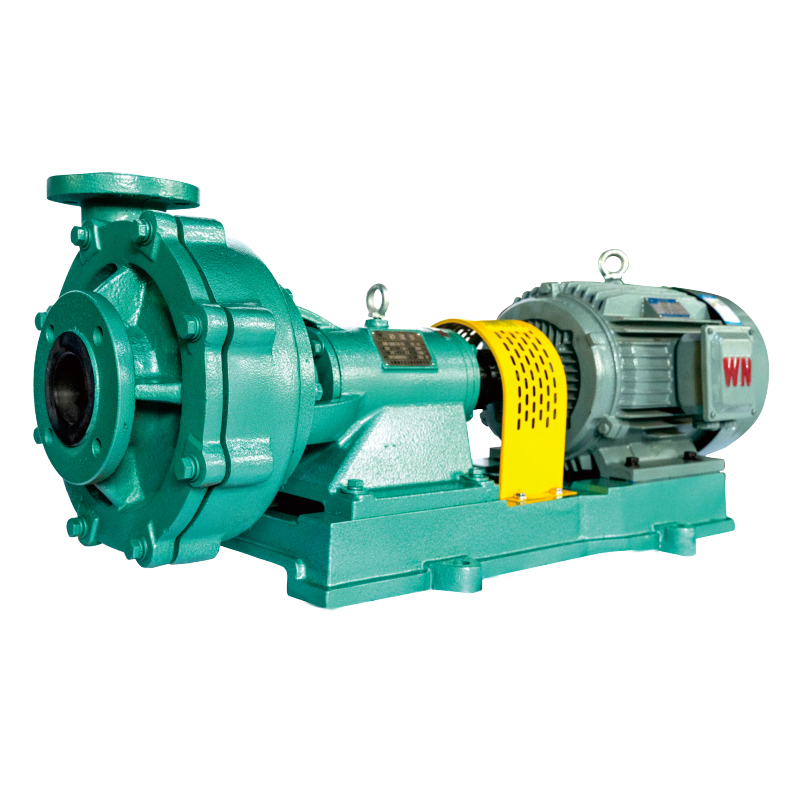
Centrifugal pumps are the most widely used pump type globally, accounting for an estimated 70–80% of all industrial pump installations. Their simplicity, low cost, and ability to handle large flow volumes make them the default choice across water supply, HVAC, irrigation, and general chemical processing.
The centrifugal pump performs best when:
- The fluid has low to moderate viscosity (typically below 200 cP)
- High flow rates are required at relatively low to moderate pressures
- Continuous, smooth flow without pulsation is essential
- Installation space and budget are constrained
- The system requires variable flow control via throttling or speed adjustment
However, centrifugal pumps lose efficiency rapidly as fluid viscosity increases. A pump impeller designed for water will experience dramatically reduced performance when pumping oil or syrup, where a positive displacement pump would be far more appropriate.
When to Choose a Positive Displacement Pump
Positive displacement pumps are indispensable in applications demanding precise metering, high pressure, or high-viscosity fluid transfer. Common PD pump types include gear pumps, piston pumps, diaphragm pumps, peristaltic pumps, and screw pumps—each offering a distinct performance profile.
A positive displacement pump is the right choice when:
- Accurate dosing is required—chemical injection, pharmaceutical manufacturing, food processing
- The fluid is highly viscous—molasses, adhesives, heavy oils, resins
- Very high operating pressures are needed—hydraulic systems, high-pressure cleaning, oil & gas injection
- The system must be self-priming or handle fluids containing entrained gases
- Shear-sensitive fluids (such as biological broths or emulsions) must be handled gently
One critical caution with PD pumps: never operate against a closed discharge valve. Unlike centrifugal pumps, which simply deadhead, a blocked positive displacement pump will continue building pressure until a component fails or a relief valve activates. Proper system protection is essential.
The Role of the Impeller in Pump Selection
Since positive displacement pumps do not use impellers—they rely on gears, pistons, diaphragms, or rotary screws to move fluid—the pump impeller is exclusively a centrifugal pump component. When evaluating centrifugal pumps, impeller selection is therefore a key technical decision that bridges the gap between pump type choice and system performance.
Specifying the correct impeller involves balancing several parameters:
- Specific speed (Ns): A dimensionless value that classifies impeller geometry; low Ns suits high-head/low-flow applications, high Ns suits low-head/high-flow
- Net Positive Suction Head (NPSH): Impeller design affects cavitation risk; a well-matched impeller minimizes the required NPSH and extends pump life
- Number of vanes: More vanes generally improve efficiency for clean liquids; fewer vanes allow passage of solids in wastewater applications
- Material compatibility: Stainless steel impellers for corrosive chemicals, rubber-lined impellers for abrasive slurries
Industry Applications: Which Pump Type Dominates Where
| Industry | Preferred Pump Type | Reason |
|---|---|---|
| Water & Wastewater | Centrifugal | High flow, low viscosity, low cost |
| Oil & Gas | Both | Centrifugal for transfer; PD for metering & injection |
| Pharmaceutical | Positive Displacement | Precise dosing, sterile diaphragm or peristaltic pumps |
| Food & Beverage | Positive Displacement | Handles viscous products; hygienic design requirements |
| Chemical Processing | Centrifugal | Wide material options; handles corrosive low-viscosity fluids |
| Hydraulics | Positive Displacement | High pressure, precise control, gear or piston pumps |
| HVAC & Building Services | Centrifugal | Reliable, low-maintenance water circulation |
Making the Right Pump Choice for Your System
No single pump type suits every application. The decision between a centrifugal pump with a carefully selected pump impeller and a positive displacement pump comes down to four primary variables: fluid viscosity, required pressure, flow precision, and budget.
For the majority of large-volume, low-viscosity fluid transfer tasks, a centrifugal pump with the right impeller configuration will deliver the best balance of performance, reliability, and total cost of ownership. For high-pressure, high-viscosity, or precision-dosing scenarios, a positive displacement pump is the technically correct solution—even at higher upfront investment.
In complex systems, both pump types are often deployed in tandem: centrifugal pumps handle bulk transfer while positive displacement pumps manage injection, metering, or high-pressure boosting. Understanding the strengths and limitations of each technology ensures engineers specify the right equipment from the outset, avoiding costly retrofits and operational inefficiencies down the line.

 Tel: +86-15256327373
  E-mail:
  Add: Anhui Southern Chemical Pump Co., Ltd. The intersection of Kaicheng Road and Fuxing Road, Jing Country, Xuancheng City, Anhui Province