


 English
 русский
 Español
 عربى
عربى
Content
- 1 Introduction to Chemical Centrifugal Pumps
- 2 Key Advantages in Chemical Industry
- 3 Material Selection and Durability
- 4 Applications in Chemical Processes
- 5 Performance and Efficiency Considerations
- 6 Maintenance and Reliability
- 7 Comparing Chemical Centrifugal Pumps to Other Pump Types
- 8 Future Trends and Innovations
- 9 Conclusion
Introduction to Chemical Centrifugal Pumps
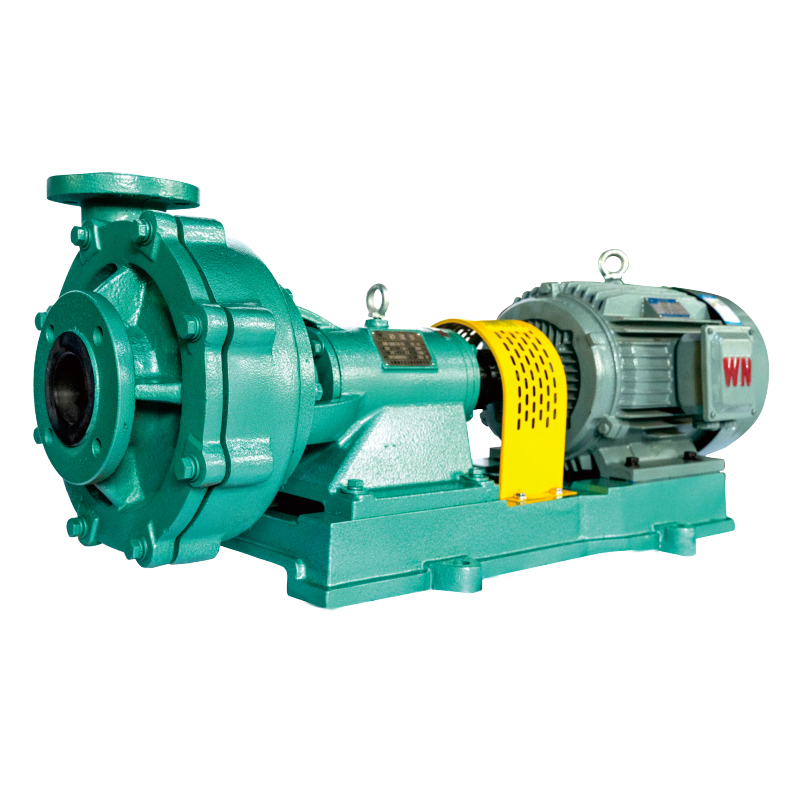
Chemical centrifugal pumps are specialized pumps designed to transfer corrosive, abrasive, or high-temperature liquids in chemical processing industries. Unlike standard centrifugal pumps, these pumps are engineered with advanced materials and mechanical designs to handle the challenging conditions of chemical environments. Their reliability and efficiency make them indispensable in modern chemical manufacturing.
Key Advantages in Chemical Industry
Chemical centrifugal pumps offer several advantages that make them essential for industrial applications:
- Corrosion resistance due to specialized materials such as stainless steel, Hastelloy, or PTFE coatings.
- Ability to handle high-temperature fluids without compromising performance.
- Low maintenance requirements compared to other pump types.
- High efficiency in continuous operation, reducing energy costs.
- Capability to manage both viscous and low-viscosity chemicals effectively.
Material Selection and Durability
The choice of materials in chemical centrifugal pumps directly affects durability and performance. Pumps handling aggressive acids or bases require materials that resist corrosion, erosion, and chemical degradation. Commonly used materials include:
- Stainless Steel 316: Suitable for moderately corrosive liquids and general chemical applications.
- Hastelloy: Ideal for highly corrosive chemicals, providing long-term stability.
- PTFE or Teflon lining: Provides chemical resistance and prevents direct contact between liquid and pump body.
- Carbon-filled plastics: Used in lightweight and cost-sensitive applications with moderate chemical exposure.
Selecting the correct material ensures longer service life, reduced downtime, and better process safety, which are crucial in high-stakes chemical production environments.
Applications in Chemical Processes
Chemical centrifugal pumps are employed across multiple chemical processes due to their versatility and efficiency. Key applications include:
- Acid and alkali transfer: Safe movement of strong corrosive liquids in production lines.
- Solvent circulation: Efficient recirculation of volatile or flammable solvents in chemical reactors.
- High-temperature chemical processes: Stable operation in heat exchangers, distillation, and evaporation systems.
- Waste chemical handling: Safe transfer of industrial effluents, minimizing environmental impact.
- Mixing and blending systems: Maintaining consistent flow rates to ensure homogeneous mixing.
Performance and Efficiency Considerations
Efficiency is a critical factor in chemical industries where energy costs and process reliability are major concerns. Chemical centrifugal pumps are optimized to maintain high efficiency under continuous operation. Key performance considerations include:
- Hydraulic efficiency determined by impeller design.
- Minimization of cavitation risk through proper suction design.
- Reduced friction and wear with precision mechanical seals.
- Stable operation over a wide range of flow rates.
- Energy savings through optimized motor and pump matching.
Maintenance and Reliability
Maintenance is an essential aspect of chemical centrifugal pump usage. Due to the corrosive nature of chemicals, components like impellers, shafts, and seals must be inspected regularly. Features that improve reliability include:
- Cartridge-style mechanical seals for quick replacement.
- Back pull-out designs to allow pump maintenance without disconnecting the piping system.
- Wear-resistant impellers and liners to extend service life.
- Integrated monitoring systems to detect early signs of vibration or leakage.
A well-maintained chemical centrifugal pump ensures continuous operation, reduces downtime, and enhances workplace safety, making it indispensable in chemical plants.
Comparing Chemical Centrifugal Pumps to Other Pump Types
While there are many pump types available, chemical centrifugal pumps are often preferred for their combination of reliability, efficiency, and chemical compatibility. A comparison is outlined below:
| Pump Type | Strengths | Limitations |
| Chemical Centrifugal Pump | High chemical resistance, energy-efficient, continuous operation | Not ideal for extremely viscous liquids |
| Diaphragm Pump | Good for slurry and abrasive liquids | Lower flow rates, pulsating output |
| Gear Pump | Handles viscous liquids well | Limited chemical resistance, higher maintenance |
| Peristaltic Pump | No mechanical seals required, self-priming | Flow pulsation, not suitable for high-pressure systems |
Future Trends and Innovations
The chemical industry continues to demand more efficient and durable pump solutions. Future developments in chemical centrifugal pumps include:
- Advanced composite materials to further increase corrosion resistance.
- Smart sensors integrated into pumps for real-time performance monitoring.
- Energy-efficient designs compliant with environmental regulations.
- Modular pump systems for easier installation and maintenance.
- Enhanced impeller geometries for better flow control and reduced wear.
Conclusion
Chemical centrifugal pumps are a cornerstone of modern chemical manufacturing due to their durability, efficiency, and ability to handle harsh fluids. Proper material selection, design optimization, and regular maintenance are crucial for maximizing their benefits. With technological advancements and increased focus on energy efficiency, these pumps will remain essential in the chemical industry for years to come.

 Tel: +86-15256327373
  E-mail:
  Add: Anhui Southern Chemical Pump Co., Ltd. The intersection of Kaicheng Road and Fuxing Road, Jing Country, Xuancheng City, Anhui Province