


 English
 русский
 Español
 عربى
عربى
1. Introduction
In the intricate world of industrial fluid handling, where safety, reliability, and efficiency are paramount, a quiet revolution has been steadily transforming operations: the rise of the magnetic drive pump. This innovative technology has redefined standards for handling everything from volatile chemicals to ultra-pure pharmaceuticals, offering a robust solution to one of industry’s oldest and most persistent challenges: the mechanical seal leak.
1.1 Definition of Magnetic Drive Pumps
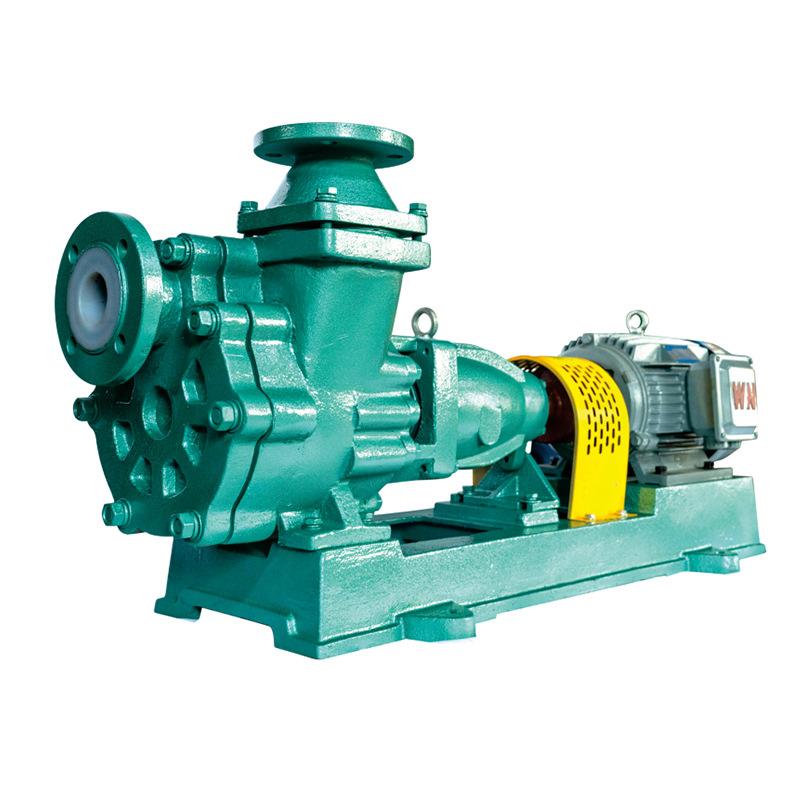
A magnetic drive pump, often abbreviated as a mag drive pump, is a type of centrifugal pump that utilizes a powerful magnetic coupling to transfer torque from the motor to the impeller, rather than a direct mechanical connection. This key distinction means there is no physical shaft penetration into the pump casing, eliminating the need for a traditional dynamic seal. The pump is instead hermetically sealed, creating a completely leak-proof containment system for the pumped fluid.
1.2 Brief History and Evolution of Magnetic Drive Technology
The fundamental principle of magnetic coupling was first patented in the early 20th century, but it wasn’t until the latter half that the technology became practically viable for industrial pumps. The initial drivers were the demanding environments of the nuclear and aerospace industries in the mid-1940s and 1950s, where handling hazardous fluids without risk of leakage was non-negotiable.
However, the true catalyst for widespread adoption was the development of new magnetic materials. The shift from ferrite magnets to powerful, lightweight rare-earth magnets like Neodymium (NdFeB) and Samarium Cobalt (SmCo) in the 1980s and 1990s was a game-changer. These advanced magnets provided significantly greater torque transmission in a more compact package, dramatically expanding the range of applications and performance capabilities of mag drive pumps, making them a practical and efficient choice for general industry.
1.3 Importance in Modern Industrial Applications
Today, the importance of magnetic drive pumps extends far beyond their leak-proof guarantee. In an era defined by stringent environmental regulations, heightened focus on workplace safety, and the relentless pursuit of operational efficiency, mag drive pumps offer a compelling value proposition. They are critical components in industries that handle expensive, aggressive, toxic, or environmentally sensitive fluids, ensuring zero emissions, protecting personnel, and preventing product loss. Furthermore, by eliminating seal-related failures—the most common cause of pump downtime—they enhance reliability, reduce maintenance costs, and contribute to more sustainable and profitable industrial processes. Their role is not just operational but strategic, enabling safer and more efficient production across the global industrial landscape.
2. How Magnetic Drive Pumps Work
At its core, the operation of a magnetic drive pump is an elegant application of fundamental electromagnetic principles, engineered to create a perfectly sealed fluid movement system. Understanding this mechanism reveals why these pumps are so effective and reliable.
2.1 Principle of Magnetic Coupling
The entire system functions on the principle of magnetic induction through a permanent magnetic coupling. Imagine two powerful magnets: if you rotate one, the other will try to follow its motion without any physical contact between them. This is precisely how a mag drive pump operates.
An external magnet (the “drive” magnet) is attached to the motor shaft. An internal magnet (the “driven” magnet) is attached to the pump impeller, housed within the fluid chamber. These two magnet assemblies are separated by a stationary, sealed barrier called the containment shell. When the motor spins the external magnet, its magnetic field penetrates the containment shell and causes the internal magnet—and thus the impeller—to rotate in perfect synchrony. This contactless power transmission is the innovation that eliminates the need for a mechanical seal.
2.2 Components: Rotor, Stator, Containment Shell
The system comprises several key components:
Outer Rotor (Drive Magnet): This is the assembly connected directly to the motor shaft. It typically houses strong rare-earth magnets arranged in a ring (a “can”) around its circumference.
Containment Shell (or Isolation Shell): This is the critical hermetic barrier that separates the fluid-bearing side of the pump from the motor and the atmosphere. It is a thin, corrosion-resistant vessel that must be strong enough to contain full pump pressure yet thin enough to allow the magnetic field to pass through with minimal energy loss. It is typically made from metals like Hastelloy or non-metallics like ceramic (for non-sparking requirements) or reinforced plastics.
Inner Rotor (Driven Magnet): This assembly is located inside the containment shell and is attached to the pump impeller. It mirrors the magnetic ring of the outer rotor. The magnetic force causes it to lock onto and follow the rotation of the outer rotor.
Stator: In the context of the magnetic drive itself, this term is less common but can refer to the stationary containment shell. More accurately, it refers to the stationary part of the pump casing that houses the entire rotating assembly and contains the fluid.
2.3 Fluid Handling and Leak-Free Operation
The process begins when the motor is energized, spinning the outer rotor. The magnetic field couples with the inner rotor, causing the impeller to spin. As the impeller rotates, it draws fluid into the center (eye) of the pump. Centrifugal force then flings the fluid to the outer edge of the impeller and into the volute of the pump casing, where kinetic energy is converted to pressure, discharging the fluid.
The complete absence of a mechanical shaft seal is what guarantees leak-free operation. The only points of sealing are static gaskets (O-rings) at the joints of the containment shell and casing, which are far more reliable and maintenance-free than dynamic seals that wear against a rotating shaft. This hermetically sealed design makes the mag drive pump inherently safe for handling the most challenging fluids.
3. Advantages Over Traditional Pumps
The innovative design of magnetic drive pumps translates into a suite of powerful advantages that directly address the limitations and pain points associated with traditional sealed pumps. These benefits make them a superior choice for a wide range of critical applications.
3.1 Leak Prevention and Environmental Safety
This is the most significant advantage. By eliminating the mechanical seal—the most common point of failure in traditional pumps—mag drive pumps achieve true zero-leak operation. This is crucial for:
Environmental Protection: Preventing spills of hazardous, toxic, or volatile fluids that can contaminate soil and groundwater.
Regulatory Compliance: Helping facilities adhere to stringent environmental regulations like the EPA’s Clean Air Act and OSHA safety standards, which strictly limit fugitive emissions.
Workplace Safety: Protecting operators from exposure to dangerous chemicals, reducing inhalation risks and the potential for chemical burns, and improving overall plant safety.
3.2 Maintenance Reduction and Longer Lifespan
The absence of a mechanical seal removes the primary reason for pump downtime and maintenance. This leads to:
Reduced Downtime: No scheduled maintenance for seal replacement, flushing, or adjustment.
Lower Lifetime Cost: While the initial investment may be higher, the drastic reduction in maintenance labor, parts (seals, seal flush systems), and downtime often results in a lower total cost of ownership.
Increased Reliability: With fewer wear-prone components, mag drive pumps offer exceptionally long service life and higher mean time between failures (MTBF).
3.3 Compatibility with Corrosive and Hazardous Fluids
Mag drive pumps are exceptionally well-suited for handling the most challenging fluids, including:
Corrosive Chemicals: Acids, caustics, and solvents that would quickly degrade mechanical seals.
Ultra-Pure Fluids: In pharmaceutical and food processing, where any potential for lubricant leakage from a seal would contaminate the product.
Hazardous Fluids: Carcinogenic, volatile, or explosive fluids where even a minor leak is unacceptable.
3.4 Energy Efficiency and Operational Cost Savings
Modern mag drive pumps contribute directly to a more efficient operation:
Optimized Hydraulics: Advanced designs minimize internal recirculation and friction losses.
No Power Loss to Seal Flush: Traditional pumps often require a complex external flush system (API plan) that consumes additional energy. Mag drives require no such system.
Reduced Friction: The magnetic coupling itself has no physical contact, eliminating a source of friction loss (though eddy current losses in the containment shell are a factor). This efficient power transfer can lead to measurable energy savings, especially in continuous-duty applications.
4. Key Applications Across Industries
The unique advantages of magnetic drive pumps have made them indispensable in a diverse range of sectors where reliability, safety, and purity are non-negotiable. Their ability to handle difficult fluids without leakage solves critical challenges across the industrial landscape.
4.1 Chemical Processing
This is a classic application for mag drive technology. Chemical plants handle a vast array of aggressive, toxic, and often expensive substances. Mag drive pumps are used for:
Transferring acids and caustics (e.g., sulfuric acid, sodium hydroxide) without risk of corrosive leaks.
Circulating solvents and volatile organic compounds (VOCs) to prevent fugitive emissions and ensure operator safety.
Dosing precise amounts of additives or catalysts in continuous processes, where reliability is key.
4.2 Pharmaceutical and Biotechnology
In these hyper-regulated industries, product purity is paramount. Any contamination from lubricants or seal degradation is catastrophic. Mag drive pumps excel in:
Purified Water (PW) and Water-for-Injection (WFI) systems: Moving ultra-pure fluids without risk of contamination.
Bioreactors and fermenters: Circulating sensitive cell cultures and media where sterility must be maintained.
Transfer of active pharmaceutical ingredients (APIs) and intermediate products, ensuring no product loss or foreign particle introduction.
4.3 Petrochemical and Oil Refining
The petrochemical industry leverages mag drive pumps to enhance safety when dealing with flammable and hazardous hydrocarbons. Key uses include:
Loading/unloading shipments of volatile liquids and light hydrocarbons.
Circulating heat transfer fluids (Therminol, Dowtherm) in high-temperature systems.
Handling catalyst slurries and additive injection, where sealing abrasive fluids is a major challenge for traditional pumps.
4.4 Water Treatment and HVAC Systems
While often handling less hazardous fluids, efficiency and reliability are critical in these applications. Mag drive pumps are favored for:
Circulating aggressive chemicals like sodium hypochlorite (bleach), ferric chloride, and other treatment chemicals in water and wastewater plants.
Closed-loop heating and cooling systems in large commercial HVAC setups, offering improved energy efficiency and reduced maintenance over sealed pumps.
Groundwater remediation systems where reliable, leak-free operation is required to pump recovered hydrocarbons or treatment chemicals over long periods.
5. Performance Considerations
Selecting the right magnetic drive pump for an application requires careful analysis beyond simply choosing a leak-free solution. Several performance factors must be evaluated to ensure reliability, efficiency, and longevity.
5.1 Flow Rate and Head Requirements
Like all centrifugal pumps, magnetic drive pumps operate on a pump curve relationship between flow rate (e.g., gallons per minute) and total dynamic head (the total pressure the pump must overcome). It is critical to select a pump whose best efficiency point (BEP) is as close as possible to the application’s required operating point.
Sizing: Oversizing a mag drive pump can be particularly detrimental. Operating too far left on the pump curve (low flow, high head) can cause excessive internal recirculation, leading to heat buildup, fluid vaporization, and potential damage to the pump.
Slip: Unlike a direct-driven pump, a magnetic coupling can experience “slip” if the torque demand from the impeller exceeds the magnetic torque capacity. This typically happens during upset conditions (e.g., a clogged line) and causes the inner and outer magnets to decouple, protecting the pump from damage but halting flow.
5.2 Material Selection for Pump Components
The choice of materials for wetted parts is paramount for chemical compatibility and durability. The three key components to specify are:
Pump Casing/Impeller: Common materials include stainless steel (304/316), alloy 20, Hastelloy C-276, and non-metallics like polypropylene (PP), polyvinylidene fluoride (PVDF), or perfluoroalkoxy (PFA) for highly corrosive duties.
Containment Shell: This is a critical safety component. Metal shells (Hastelloy, Titanium) are used for high-pressure applications. Non-metallic shells (ceramic, PFA-coated) are essential for handling fluids that could ignite from a spark if a metal shell were to rub during a severe decoupling event.
Inner Magnet Assembly: Magnets are typically encapsulated in a corrosion-resistant polymer (like PFA or ETFE) to protect them from the fluid. The magnet material itself (e.g., Samarium Cobalt vs. Neodymium) must be selected based on its corrosion resistance and temperature tolerance.
5.3 Temperature and Pressure Limits
Mag drive pumps have specific operating windows:
Temperature: The maximum temperature is often limited by the material of the containment shell and the magnet encapsulation. High temperatures can weaken magnetic strength (a property known as the Curie point). For standard pumps, limits are typically between 150°C to 250°C (302°F to 482°F), with special designs available for higher extremes.
Pressure: The containment shell is a pressure vessel. Its design and material thickness dictate the maximum allowable pressure for the pump. Exceeding this pressure can cause the shell to fail catastrophically. Pressure ratings are a key specification that must be carefully matched to the system requirements.
5.4 Handling of Abrasive or Viscous Fluids
While excellent for many fluids, mag drive pumps require special consideration for challenging media:
Abrasive Fluids (Slurries): Abrasive particles can cause accelerated wear on the impeller and, more critically, on the containment shell. A thinner shell is more efficient but less resistant to abrasion. For abrasive duties, a pump with a thicker, hardened, or specially lined containment shell must be selected, often at the cost of some efficiency.
Viscous Fluids: High viscosity increases the torque required to spin the impeller. This can push the pump’s operation beyond the torque capacity of its magnetic coupling, leading to decoupling (slip). Mag drive pumps are generally better suited for low to medium viscosity fluids similar to water.
6. Market Trends and Innovations
The magnetic drive pump market is not static; it is driven by a constant pursuit of greater efficiency, reliability, and intelligence. Several key trends and technological innovations are shaping the next generation of these pumps, expanding their capabilities and applications.
6.1 Advancements in Magnetic Materials
The heart of the pump is its magnetic coupling, and material science continues to push its limits.
Higher-Grade Rare-Earth Magnets: Ongoing refinements in the manufacturing of Neodymium Iron Boron (NdFeB) and Samarium Cobalt (SmCo) magnets yield greater magnetic strength (higher energy product) and improved temperature resistance. This allows for:
More Compact Designs: Transmitting the same torque in a smaller package.
Higher Torque Capacity: Enabling pumps to handle more viscous fluids or higher system pressures.
Better High-Temperature Performance: Expanding into applications previously unsuitable for mag drives.
6.2 Integration with Smart Monitoring and IoT Systems
The industry-wide shift toward Industry 4.0 and predictive maintenance is fully embracing mag drive pumps.
Embedded Sensors: Modern pumps can be equipped with sensors to monitor critical parameters in real-time, such as:
Bearing Wear: Vibration sensors detect imbalances before they lead to catastrophic failure.
Temperature: Monitoring pump casing and bearing temperature for signs of dry running or clogging.
Decoupling (Slip): Sensors can detect when the inner and outer magnets have slipped, alerting operators to a system fault (e.g., a closed valve or clogged line).
IoT Connectivity: This data is transmitted to centralized control systems or the cloud, enabling:
Predictive Maintenance: Algorithms analyze trends to predict failures and schedule maintenance before a breakdown occurs, maximizing uptime.
Remote Monitoring and Control: Operators can view pump performance and health from anywhere, optimizing entire systems.
6.3 Expansion in Emerging Industrial Markets
As global industrialization continues, the adoption of advanced pumping technology follows.
Asia-Pacific Growth: Rapid industrial expansion in China, India, and Southeast Asia, particularly in chemical manufacturing, pharmaceuticals, and water treatment, is a primary driver for market growth. New facilities are often equipped with state-of-the-art, efficient technology from the outset.
Stringent Environmental Regulations: Worldwide, environmental and safety regulations are becoming stricter. This is pushing industries in emerging markets to replace leak-prone sealed pumps with hermetically sealed mag drives to comply with new standards and reduce their environmental footprint.
6.4 Sustainability and Energy-Efficient Designs
The push for decarbonization and reduced energy consumption is a major innovation driver.
Hydraulic Efficiency: Manufacturers are using computational fluid dynamics (CFD) to optimize impeller and volute designs, minimizing hydraulic losses and maximizing the pump’s efficiency rating.
System Approach: The focus is shifting from just pump efficiency to overall system efficiency. Mag drive pumps, with their high reliability and lack of auxiliary seal flush systems, contribute significantly to reducing the total energy consumption of a fluid handling system over its lifecycle.
Lifecycle Analysis: The long lifespan and reduced maintenance needs of mag drive pumps contribute to a lower total cost of ownership and a smaller environmental impact from manufacturing replacement parts and disposing of failed components.
7. Challenges and Limitations
While magnetic drive pumps offer a compelling array of benefits, they are not a universal solution for every pumping scenario. A thorough understanding of their inherent limitations is crucial for proper application and to avoid operational issues.
7.1 Initial Cost vs. Traditional Pumps
The most frequently cited barrier to adoption is the higher upfront capital expenditure (CAPEX).
Cost Drivers: The use of high-performance rare-earth magnets, the precision engineering of the containment shell, and the frequent use of exotic corrosion-resistant materials all contribute to a higher manufacturing cost compared to a standard mechanically sealed centrifugal pump.
Total Cost of Ownership (TCO) Perspective: While the initial purchase price is higher, the decision must be evaluated based on TCO. The significant reductions in maintenance costs, seal support systems, downtime, and product loss often lead to a lower TCO over the pump’s operational life, making it a financially sound investment for appropriate applications.
7.2 Performance Limitations for Very High Pressures
The design of the magnetic coupling and the containment shell imposes practical limits on pressure capability.
Containment Shell as a Pressure Vessel: The shell must contain the full discharge pressure of the pump. To allow efficient magnetic flux transfer, the shell must be thin, which inherently limits its pressure-containing capability. For very high-pressure applications (e.g., above 1500 psi/100 bar), traditional canned motor pumps or exceptionally robust mag drive designs are required, often at a significant cost premium.
Torque Transmission: Higher system pressures require the pump to generate higher discharge pressure, which demands more torque from the impeller. There is a physical limit to the torque a magnetic coupling can transmit based on its size and magnet strength.
7.3 Sensitivity to Alignment and Installation Quality
Although they eliminate alignment concerns between the pump and motor shaft (as they are often integrated units), mag drive pumps have their own unique alignment sensitivity.
Internal Alignment: The precise radial and axial alignment between the inner and outer magnet assemblies is critical. Improper installation or excessive pipe strain can misalign these assemblies, causing the inner magnet to drag against the containment shell. This creates friction, heat, and rapid wear, potentially leading to a failure of the containment shell.
Dry Running and Overheating: This is a primary operational vulnerability. The pump’s fluid often serves as a coolant and lubricant for the internal bearings that support the inner rotor assembly. Running the pump dry, even for short periods, can cause these bearings to overheat and fail rapidly, leading to catastrophic internal damage and coupling failure. Modern pumps often include dry-run protection sensors as a critical safeguard.
7.4 Handling of Abrasive or High-Solids Fluids (Reiterated and Expanded)
While mentioned in performance considerations, this point is a significant operational limitation worthy of emphasis.
Abrasive Wear: The close tolerances and the thin containment shell are highly susceptible to wear from abrasive particles suspended in the fluid. This abrasion can quickly degrade the shell’s integrity, leading to failure.
Clogging: The pumped fluid lubricates and cools the pump’s internal bearings. If the fluid contains solids or fibers, they can clog these small clearances, leading to bearing seizure and failure. Mag drive pumps are generally not recommended for untreated wastewater, mud, or slurries with high solids content unless specifically designed for such duties with hardened materials and larger internal clearances.
8. Case Studies/Success Stories
The theoretical advantages of magnetic drive pumps are best understood through their practical, real-world applications. The following case studies illustrate their transformative impact on safety, cost, and operational efficiency.
8.1 Chemical Industry: Eliminating Hazardous Leaks in an Acid Transfer System
Context: A major chemical manufacturing plant was using traditional sealed pumps to transfer concentrated sulfuric acid from storage tanks to a reactor process. The pumps experienced frequent seal failures, leading to dangerous acid leaks. This created safety hazards for personnel, required costly emergency clean-up procedures, and resulted in significant product loss and environmental reporting incidents.
Solution: The plant replaced the problematic sealed pumps with sealless magnetic drive pumps constructed of a high-grade alloy (Hastelloy C-276) suitable for concentrated sulfuric acid service. The mag drives were also equipped with thermocouples on the bearing housing for dry-run protection.
Results:
100% Elimination of Fugitive Emissions: The leak-free operation completely stopped the hazardous spills.
Enhanced Safety: Operator exposure risk was drastically reduced, improving workplace safety metrics.
Cost Savings: The plant eliminated costs associated with seal replacements, clean-up crews, and regulatory fines. The ROI was achieved in less than 14 months through reduced maintenance and avoided incidents.
8.2 Pharmaceutical Industry: Ensuring Absolute Purity in a WFI Circulation Loop
Context: A biotechnology company producing injectable drugs required a pump for its Water-for-Injection (WFI) circulation system. Any potential for contamination from lubricants, seal wear particles, or microbial growth in stagnant seal flush areas was completely unacceptable and could lead to a multi-million dollar batch loss and regulatory action.
Solution: A hygienic-grade magnetic drive pump with a polished stainless steel finish and compliant 3-A certification was installed. The sealless design guaranteed no contamination, and the pump’s ability to handle high temperatures supported the system’s thermal sanitization cycles.
Results:
Zero Contamination: The pump ensured the integrity of the ultra-pure WFI, critical for product quality and patient safety.
Validation Compliance: The cleanable design and lack of dead zones simplified the validation process for regulatory agencies like the FDA.
Reliability: Continuous, maintenance-free operation ensured uninterrupted circulation, which is vital for maintaining water purity and temperature specifications.
8.3 Cost Savings and Environmental Impact Analysis: A Plant-Wide Retrofit
Context: A large petrochemical facility performed an audit of its hundreds of small-to-mid-sized centrifugal pumps handling volatile organic compounds (VOCs). The audit revealed substantial costs from seal maintenance, energy consumption from seal flush systems, and compliance costs related to monitoring and reporting fugitive emissions under LDAR (Leak Detection and Repair) regulations.
Solution: The facility initiated a phased program to retrofit over 150 pumps with magnetic drive equivalents where technically feasible based on pressure and flow requirements.
Results (Annualized):
Maintenance Reduction: A 95% decrease in maintenance work orders for the replaced pumps.
Energy Savings: A 5% reduction in energy consumption per pump due to the elimination of seal flush support systems.
Environmental Compliance: Reduced fugitive emissions by an estimated 8.5 tons of VOCs annually, significantly lowering environmental liability and simplifying regulatory compliance.
Financial Payback: The project achieved a full return on investment in under three years through combined savings in maintenance, energy, and avoided compliance costs.
9. Future Outlook
The trajectory of magnetic drive pump technology points toward even greater integration, intelligence, and efficiency. Driven by the global demands of sustainability, digitalization, and operational excellence, the future of this technology is both innovative and essential.
9.1 Technological Advancements on the Horizon
Research and development are focused on overcoming current limitations and unlocking new potentials.
Next-Generation Materials: The exploration of advanced materials science is key. This includes:
Composite Containment Shells: Developing thinner, stronger, and more abrasion-resistant shells using ceramic composites or carbon-fiber-reinforced polymers to improve efficiency and expand into tougher fluid services.
Advanced Magnet Encapsulation: New coating and encapsulation technologies will further protect magnets from highly corrosive and high-temperature fluids, pushing the boundaries of application suitability.
Advanced Bearing Technology: The development of self-lubricating, ultra-durable bearing materials (e.g., advanced silicon carbide composites, diamond-like carbon coatings) will significantly enhance dry-run tolerance and lifespan, addressing one of the technology’s primary operational vulnerabilities.
9.2 Potential Market Growth and Adoption Rates
The market for magnetic drive pumps is expected to see robust and sustained growth.
Regulatory Tailwinds: As global environmental and safety regulations continue to tighten, the mandate for leak-free technology will become more pronounced, forcing the adoption of sealless pumps in an expanding range of industries.
Economic Drivers: The rising focus on Total Cost of Ownership (TCO) over initial purchase price will make the compelling financial case for mag drives more apparent to a broader range of end-users, including those in cost-sensitive emerging markets.
Market Expansion: Growth is anticipated not only in traditional strongholds (chemicals, pharma) but also in sectors like renewable energy (e.g., electrolyte circulation in flow batteries), electric vehicle battery manufacturing, and advanced recycling processes.
9.3 Role in Sustainable Industrial Solutions
Magnetic drive pumps will be a cornerstone technology in the transition to greener manufacturing.
Energy Efficiency: Continued hydraulic improvements will align with global initiatives for energy reduction. Mag drives will be critical components in systems designed for optimal energy use.
Circular Economy: Their ability to handle aggressive fluids reliably makes them ideal for closed-loop processes and chemical recycling systems, where zero leakage is fundamental to the process economics and environmental goals.
Emissions Reduction: By providing a proven solution to eliminate Scope 1 fugitive emissions (direct emissions from owned or controlled sources), they offer industries a direct path to achieving decarbonization and net-zero targets.
10. Conclusion
10.1 Summary of Benefits and Industrial Significance
Magnetic drive pump technology represents a profound leap forward in fluid handling. By elegantly replacing the failure-prone mechanical seal with a hermetic magnetic coupling, it delivers unparalleled benefits: absolute leak integrity for environmental safety and personnel protection, dramatically reduced maintenance and lifetime costs, and superior compatibility with the world’s most challenging fluids. Its significance is undeniable, forming the backbone of safe, reliable, and efficient operations across the critical chemical, pharmaceutical, and energy industries.
10.2 Final Thoughts on Adoption and Technological Trends
The initial higher investment in magnetic drive technology should be viewed not as an expense, but as a strategic investment in safety, sustainability, and operational reliability. The trends are clear: the future of industrial pumping is sealless, smart, and sustainable. As advancements in materials, IoT integration, and design continue to overcome existing limitations and expand their capabilities, magnetic drive pumps will cease to be a specialized alternative and will become the standard for responsible and efficient fluid management in the 21st-century industrial landscape. Their adoption is a clear indicator of an industry committed to progress, safety, and environmental stewardship.

 Tel: +86-15256327373
  E-mail:
  Add: Anhui Southern Chemical Pump Co., Ltd. The intersection of Kaicheng Road and Fuxing Road, Jing Country, Xuancheng City, Anhui Province