


 English
 русский
 Español
 عربى
عربى
Content
Introduction to Centrifugal Pumps
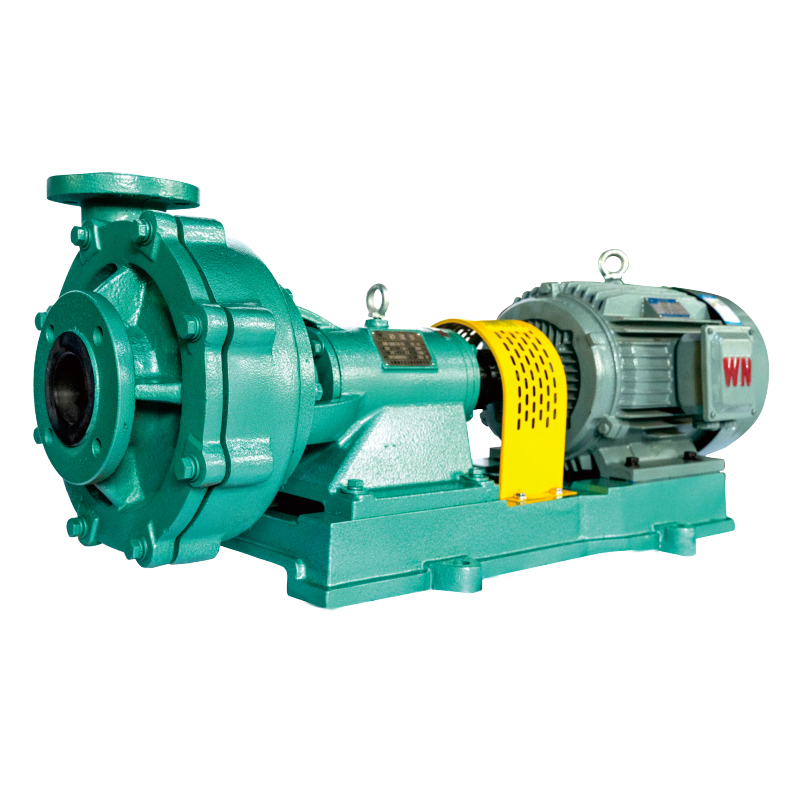
Centrifugal pumps are one of the most widely used types of pumps in industrial and commercial operations due to their efficiency, reliability, and adaptability. By converting rotational kinetic energy into hydrodynamic energy, these pumps effectively move liquids through piping systems with minimal mechanical complexity. Their versatility makes them suitable for large-scale operations in water supply, chemical processing, wastewater management, and many other industries where high flow rates are required.
How Centrifugal Pumps Work
Understanding the operating principle of centrifugal pumps helps explain their efficiency and suitability for large-scale operations.
Conversion of Kinetic Energy to Pressure
Centrifugal pumps use an impeller to accelerate fluid outward from the pump’s center. This radial flow increases the fluid’s velocity, which is then converted into pressure energy as the fluid exits the pump casing. This mechanism allows high-volume movement of liquids with relatively low energy input.
Simple Mechanical Design
The mechanical simplicity of centrifugal pumps, which typically consist of an impeller, casing, and shaft, reduces maintenance requirements. Fewer moving parts mean less risk of mechanical failure, which is critical in large-scale operations where downtime can be costly.
Continuous Flow Operation
Centrifugal pumps are capable of delivering continuous, steady flow, unlike positive displacement pumps that may operate in cycles. This makes them ideal for applications that require consistent fluid movement, such as irrigation, chemical dosing, or cooling systems.
Advantages for Large-Scale Operations
Centrifugal pumps offer several key benefits that make them suitable for industrial-scale operations.
High Flow Rate Capabilities
Centrifugal pumps can handle large volumes of liquid efficiently, making them suitable for municipal water supply, wastewater treatment plants, and large-scale industrial processes. Their ability to maintain high flow rates without significant energy loss ensures operational efficiency.
Energy Efficiency
Modern centrifugal pumps are designed with advanced impeller shapes and low-friction bearings, which reduce energy consumption. Energy-efficient pumps lower operational costs, which is critical for large-scale facilities where pumps may operate 24/7.
Versatility in Fluid Handling
Centrifugal pumps are capable of handling a wide range of fluids, including water, chemicals, slurries, and other liquids. By selecting appropriate materials and impeller designs, operators can ensure compatibility with corrosive, abrasive, or high-temperature fluids.
Ease of Maintenance
Due to their simple mechanical structure, centrifugal pumps require minimal maintenance. Routine inspections of bearings, seals, and impellers are usually sufficient to ensure long-term reliability. Quick maintenance reduces downtime in critical industrial processes.
Types of Centrifugal Pumps for Large-Scale Operations
Different centrifugal pump designs cater to varying operational needs, each offering specific advantages.
Single-Stage Pumps
Single-stage centrifugal pumps have one impeller and are ideal for applications requiring moderate pressure and high flow rates. They are often used in water supply systems and industrial cooling circuits.
Multi-Stage Pumps
Multi-stage pumps incorporate multiple impellers in series, generating higher pressure for applications such as boiler feedwater, high-rise building water distribution, and long-distance pipeline pumping.
Horizontal vs. Vertical Pumps
Horizontal pumps are generally easier to maintain and are suitable for low to medium head applications. Vertical pumps save floor space and are ideal for deep well or sump pumping, providing flexibility for facility design.
Applications in Industrial and Commercial Sectors
Centrifugal pumps are widely used across various large-scale operations due to their efficiency and versatility.
- Municipal Water Supply – Efficient delivery of potable water to residential and commercial areas.
- Wastewater Treatment – Handling sludge, effluents, and chemical dosing.
- Industrial Processing – Circulating chemicals, cooling water, and process fluids.
- Power Generation – Boiler feedwater and condensate return systems.
- Irrigation Systems – Large-scale agricultural water distribution.
Comparison with Positive Displacement Pumps
Centrifugal pumps differ from positive displacement pumps in several key ways, which influence their suitability for large-scale operations:
| Feature | Centrifugal Pump | Positive Displacement Pump |
| Flow Type | Continuous, smooth flow | Pulsating, intermittent flow |
| Efficiency at High Flow | High, suitable for large volumes | Lower, more suited for high pressure low flow |
| Maintenance | Minimal, fewer moving parts | Higher, multiple mechanical components |
| Fluid Compatibility | Wide range of liquids | Specialized fluids, limited versatility |
| Energy Consumption | Generally lower for large flows | Higher for equivalent volume handling |
Conclusion
Centrifugal pumps are ideal for large-scale operations due to their high efficiency, continuous flow capabilities, versatility in handling diverse fluids, and minimal maintenance requirements. With various designs available, including single-stage, multi-stage, horizontal, and vertical pumps, facilities can select the optimal configuration for specific industrial needs. Their ability to deliver large volumes of liquid reliably makes centrifugal pumps an indispensable asset in water supply, wastewater management, industrial processing, and power generation, ensuring operational efficiency and long-term performance.

 Tel: +86-15256327373
  E-mail:
  Add: Anhui Southern Chemical Pump Co., Ltd. The intersection of Kaicheng Road and Fuxing Road, Jing Country, Xuancheng City, Anhui Province