


 English
 русский
 Español
 عربى
عربى
Content
- 1 Why Pump Selection Is a Bigger Decision in 2026
- 2 How Centrifugal Pumps Work
- 3 How Positive Displacement Pumps Work
- 4 The Flow-Pressure Curve: The Most Important Difference
- 5 Viscosity: Where the Two Types Diverge Most
- 6 Priming, Dry Running, and Self-Priming Capability
- 7 Efficiency, Energy Consumption, and Maintenance Costs
- 8 Chemical Industry Applications: Which Pump Fits Which Process
- 9 Centrifugal vs. Positive Displacement: A Selection Framework
Why Pump Selection Is a Bigger Decision in 2026
Energy costs across global manufacturing have risen sharply over the past two years, and industrial operators are under growing pressure to justify every kilowatt consumed in their processes. At the same time, regulatory requirements in chemical processing, pharmaceuticals, and water treatment have tightened — demanding greater precision, leak prevention, and verifiable performance from fluid handling equipment. In this environment, selecting the wrong pump type is no longer just an engineering inconvenience. It translates directly into inflated operating costs, accelerated component wear, and compliance risk.
The decision almost always comes down to two fundamental technologies: centrifugal pumps and positive displacement pumps. Both transfer fluid from one point to another. Beyond that shared purpose, they operate on entirely different physical principles, perform differently under pressure and viscosity changes, and suit very different process conditions. Understanding what separates them is the foundation of any sound pump specification.
How Centrifugal Pumps Work
A centrifugal pump is a dynamic machine. It converts the rotational energy of a motor into kinetic energy in the fluid by means of a spinning impeller. As the impeller rotates inside the pump casing, it accelerates fluid outward from the center of rotation toward the casing wall. That velocity is then converted into pressure as the fluid decelerates through the volute or diffuser and exits through the discharge port.
The key characteristic of this mechanism is that the pump does not physically trap or push fluid. It creates a pressure differential that encourages fluid to flow — which means its output is inherently sensitive to changes in system conditions. Increase the back pressure in the discharge line and the flow rate drops. Reduce it and flow increases. This relationship between pressure and flow is captured in the pump's performance curve, and it defines both the strengths and the limitations of centrifugal technology.
Centrifugal pumps perform best at or near their Best Efficiency Point (BEP) — the specific combination of flow rate and head at which the pump operates with maximum hydraulic efficiency. Sustained operation away from the BEP increases shaft deflection, accelerates seal wear, raises energy consumption, and shortens pump life. For applications with stable, predictable system conditions and low-viscosity fluids, centrifugal pumps are extremely well-suited. For variable-demand or high-viscosity applications, their efficiency degrades rapidly.
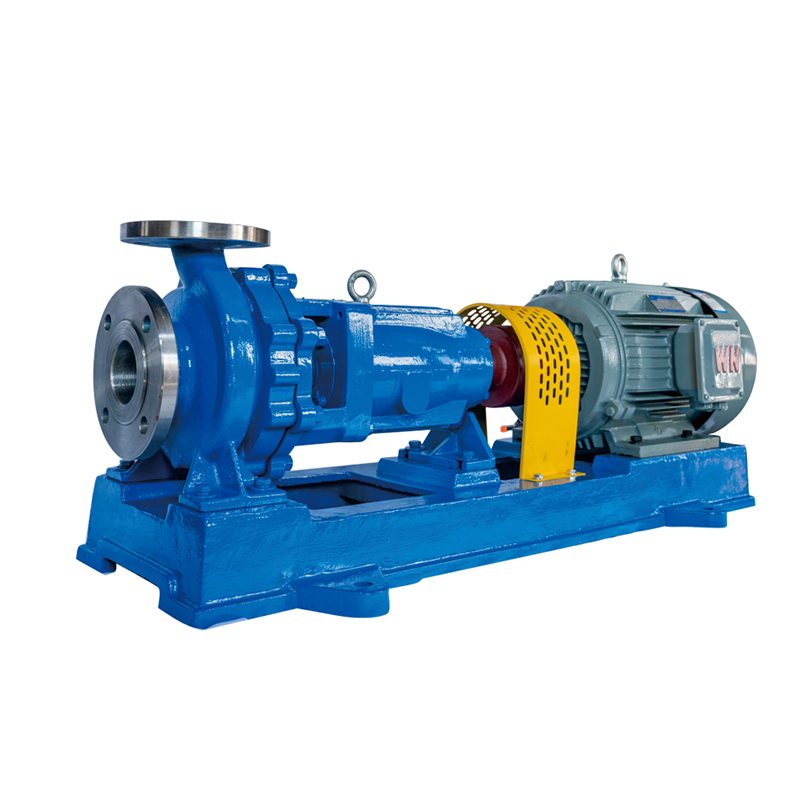
chemical centrifugal pumps engineered for corrosive and high-temperature media address one of the most demanding centrifugal applications — where standard pump materials fail and fluid properties require purpose-built construction in fluoroplastics, stainless steel, or corrosion-resistant alloys.
How Positive Displacement Pumps Work
A positive displacement pump operates on a completely different principle. Rather than using kinetic energy to encourage flow, it mechanically traps a fixed volume of fluid and forces that volume through the system with each cycle of operation. The fluid has no choice but to move — regardless of the pressure on the discharge side.
This category divides into two broad families. Rotary positive displacement pumps use rotating elements to create expanding and contracting cavities that move fluid continuously. Common designs include gear pumps (where intermeshing gears carry fluid between their teeth), screw pumps (where helical rotors trap and advance fluid along the axis), vane pumps (where sliding vanes sweep fluid through a rotor), and progressive cavity pumps (where a helical rotor turns inside a stator to create a moving seal-off cavity).
Reciprocating positive displacement pumps use back-and-forth motion — pistons, plungers, or diaphragms — to alternately draw fluid into a chamber and then expel it through check valves. Piston pumps and diaphragm pumps fall into this category. Reciprocating pumps produce a pulsed rather than continuous flow, which can require dampeners in pressure-sensitive systems but also makes them ideal for precise metering and dosing applications where exact volume per stroke matters.
The defining performance characteristic of all positive displacement pumps is that flow rate is determined by displacement volume and speed — not by system pressure. A PD pump running at a set speed delivers the same volume per revolution whether the discharge pressure is 2 bar or 20 bar. This makes it fundamentally different from a centrifugal pump and directly suited to applications where flow consistency is non-negotiable.
The Flow-Pressure Curve: The Most Important Difference
No single concept better illustrates the practical difference between these two pump families than the flow-pressure curve — and understanding it prevents the most common pump selection mistakes.
For a centrifugal pump, the curve slopes downward from left to right: as discharge pressure increases, flow rate decreases. At zero pressure (open discharge), flow is at its maximum. As back pressure builds — from pipe friction, elevation change, or downstream resistance — flow falls. If back pressure equals the pump's shutoff head, flow stops entirely. This behavior makes centrifugal pumps highly responsive and controllable in systems where flow modulation through pressure or valve adjustment is desirable, but it also means that any unexpected rise in system pressure reduces output.
For a positive displacement pump, the curve is nearly vertical: flow remains essentially constant regardless of pressure, up to the mechanical limits of the pump casing and drive. The PD pump will continue delivering its fixed volume per revolution even as back pressure rises — which is enormously useful in high-pressure applications but also introduces a serious safety consideration. If the discharge line is blocked or a valve is inadvertently closed, pressure builds without limit until something fails. Positive displacement pump installations always require pressure relief valves for this reason.
The practical implication is straightforward. Systems with variable load conditions and fluctuating resistance favor centrifugal pumps, especially when paired with variable frequency drives (VFDs) for flow control. Systems requiring consistent delivery volume regardless of downstream pressure variations favor positive displacement pumps.
Viscosity: Where the Two Types Diverge Most
Fluid viscosity is the single most decisive factor in the centrifugal versus positive displacement choice, and it is where the two technologies diverge most dramatically in real-world performance.
Centrifugal pumps are optimized for low-viscosity fluids — water, light chemicals, solvents, and thin process liquids with viscosities in the range of 1 to roughly 100 centipoise. Within this range, the impeller spins efficiently and energy transfer to the fluid is effective. As viscosity increases beyond this threshold, frictional losses inside the pump rise sharply. The impeller must work harder against the thicker fluid, efficiency falls, the motor draws more current, and heat buildup accelerates wear on seals and bearings. For heavy oils, syrups, polymer solutions, or slurries with significant solids content, a centrifugal pump often becomes technically unsuitable before it becomes economically unacceptable.
Positive displacement pumps handle high-viscosity fluids naturally and often improve in efficiency as viscosity increases. Thicker fluids reduce internal slip — the leakage of fluid back from the discharge side to the suction side through clearances in the pump — which means volumetric efficiency actually rises with viscosity up to a point. Gear pumps, screw pumps, and progressive cavity pumps are routinely used for heavy fuel oils, molasses, adhesives, resins, bitumen, and polymer melts that would stall or destroy a centrifugal pump within minutes of operation.
Positive displacement pumps also handle shear-sensitive fluids — materials that change in viscosity or physical structure when subjected to mechanical stress — far more gently than centrifugal pumps. The rapid impeller action of a centrifugal pump can degrade emulsions, damage biological cells, or break down polymer chains. Progressive cavity and peristaltic pumps in particular are chosen for food, pharmaceutical, and biotech applications precisely because their gentle, low-shear pumping action preserves the integrity of sensitive media.
Priming, Dry Running, and Self-Priming Capability
A practical operational difference that matters enormously in plant start-up and in applications where fluid levels fluctuate is the priming requirement — and on this dimension, the two technologies are fundamentally different.
Standard centrifugal pumps must be fully primed with liquid before start-up. The impeller works by imparting velocity to liquid; if the pump casing contains only air, no pressure differential is created, no flow occurs, and the pump runs dry. Dry running — even briefly — damages mechanical seals, overheats the pump body, and can cause rapid impeller wear or complete pump failure. Self-priming centrifugal pump designs exist and address this limitation by incorporating a reservoir that maintains liquid in the casing between uses, but they add cost and complexity and still have limits on suction lift.
Most positive displacement pumps, by contrast, are inherently self-priming and tolerant of intermittent dry running. The mechanical displacement action works regardless of whether the medium is liquid, gas, or a mixture of both — allowing the pump to pull fluid up from below, handle fluctuating liquid levels, and restart after running dry without damage in many designs. Diaphragm pumps in particular can run completely dry indefinitely, making them suitable for applications where the process vessel may empty fully between batches.
For remote installations, sumps, or any application where the pump may start against an empty or partially filled suction line, this distinction in priming behavior is a major operational advantage for positive displacement technology.
Efficiency, Energy Consumption, and Maintenance Costs
Neither pump type is universally more energy-efficient — efficiency is entirely application-dependent, and a pump of either type operating outside its design conditions will consume more energy than one correctly matched to its process.
At their respective optimal operating points, modern centrifugal pumps achieve hydraulic efficiencies of 70–90% in larger industrial sizes, with lower efficiencies in smaller units. Their efficiency advantage lies in simplicity: fewer moving parts, lower internal friction at design conditions, and excellent compatibility with VFD control for variable-demand applications. When a centrifugal pump is paired with a VFD and the system demand genuinely varies, the energy savings from reduced speed (which follows the affinity laws — power scales with the cube of speed) can be substantial.
Positive displacement pumps achieve high volumetric efficiency — typically 85–98% depending on design and operating pressure — but mechanical efficiency is lower due to the higher internal friction of gears, screws, vanes, or reciprocating elements in contact with the fluid or casing. Their energy advantage emerges in high-viscosity or high-pressure applications where a centrifugal pump would require a significantly oversized motor to achieve the same output.
On maintenance costs, centrifugal pumps generally have the advantage. Fewer moving parts mean fewer wear items. The primary maintenance points are the mechanical seal, bearings, and impeller — all accessible and relatively inexpensive in standard designs. Positive displacement pumps carry more wear surfaces: gears, rotors, stators, diaphragms, check valves, and seals all require monitoring and periodic replacement. For high-viscosity, abrasive, or chemically aggressive services, maintenance intervals for PD pumps can be significantly shorter than for centrifugal alternatives, and spare parts costs are higher.
Chemical Industry Applications: Which Pump Fits Which Process
Chemical processing presents some of the most demanding fluid handling conditions in any industry — aggressive media, wide temperature ranges, strict leak containment requirements, and often both high-viscosity and low-viscosity streams within the same plant. The centrifugal versus positive displacement decision plays out differently across these sub-applications.
Acid and alkali transfer at moderate viscosity is a natural home for centrifugal pumps, provided the pump construction materials are matched to the medium. Fluoroplastic-lined centrifugal pumps and magnetic drive designs — which eliminate the mechanical shaft seal entirely — are standard choices for hydrochloric acid, sulfuric acid, sodium hydroxide, and similar corrosive streams at low to moderate concentrations. The high flow rates typical of bulk chemical transfer favor centrifugal technology.
High-viscosity chemical products — resins, adhesives, polymer solutions, heavy solvents, and concentrated process liquors — require positive displacement. Gear pumps and screw pumps dominate this service because they maintain consistent flow even as viscosity varies with temperature through the process, and their output is independent of the pressure fluctuations that would make a centrifugal pump unreliable.
Precision metering and dosing — adding catalysts, reagents, or additives at controlled volumetric rates — is almost exclusively the domain of positive displacement pumps. Diaphragm metering pumps and piston pumps deliver exact volumes per stroke, making them the only suitable choice where the accuracy of chemical addition directly affects product quality or reaction yield.
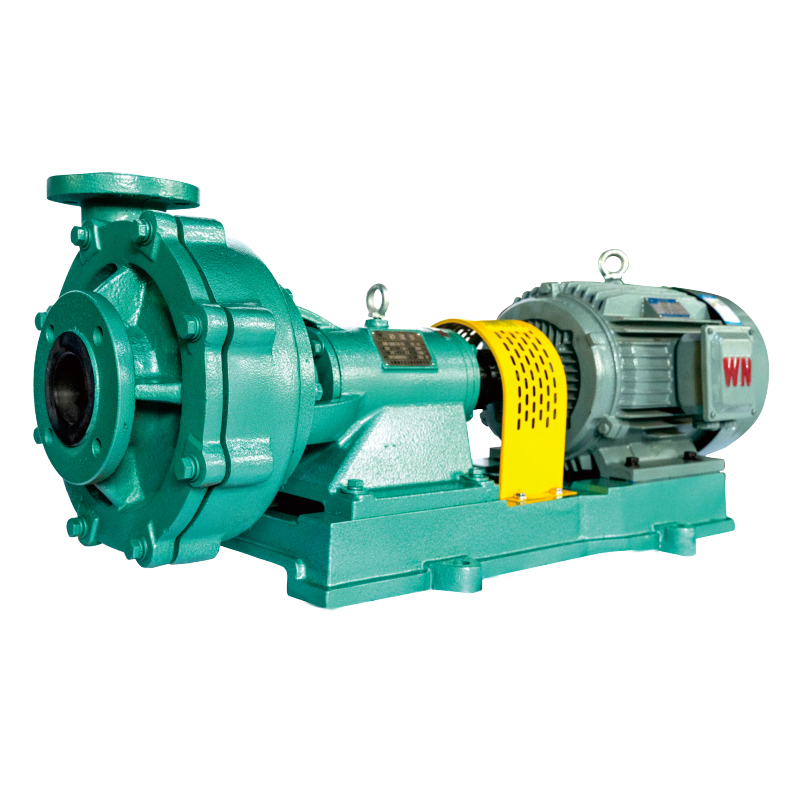
Slurry and abrasive media handling — mineral slurries, crystalline suspensions, flue gas desulfurization streams — is served by both technologies depending on solid content and particle size. At lower solid concentrations and fine particle sizes, purpose-built centrifugal slurry pumps with wear-resistant liners are preferred. At higher solid contents or with coarser particles, progressive cavity or piston pumps handle the abrasive load without the rapid impeller erosion that undermines centrifugal pump life.
Centrifugal vs. Positive Displacement: A Selection Framework
The decision matrix below consolidates the key selection criteria into a practical reference. No single factor is determinative in isolation — optimal pump selection weighs all relevant process parameters together.
| Process Parameter | Favor Centrifugal Pump | Favor Positive Displacement Pump |
|---|---|---|
| Fluid viscosity | Low viscosity (<100 cP) | High viscosity (>100 cP and above) |
| Flow rate requirement | High flow, variable demand | Low to medium flow, constant volume |
| Pressure requirement | Low to moderate, variable | High pressure, consistent delivery |
| Flow consistency | Variable flow acceptable | Constant flow required regardless of pressure |
| Fluid shear sensitivity | Shear-tolerant fluids only | Shear-sensitive fluids (emulsions, biologics) |
| Priming / dry running | Flooded suction available | Suction lift, intermittent dry running possible |
| Metering / dosing precision | Approximate flow control | Precise volumetric delivery required |
| Maintenance complexity | Lower — fewer wear parts | Higher — seals, rotors, valves require monitoring |
| Initial cost | Generally lower | Generally higher, especially for specialist designs |
| Abrasive / solids-laden fluid | Low to moderate solid content | High solid content or coarse particles |
In practice, most industrial plants operate both pump types — centrifugal pumps dominating bulk transfer, cooling, and circulation duties, while positive displacement pumps handle metering, high-viscosity product transfer, and high-pressure injection services. The engineering challenge is not choosing one technology over the other in principle, but correctly identifying which process conditions call for which mechanism — and specifying construction materials that match the chemical and thermal demands of the service.
Getting that specification right at the outset avoids the far costlier exercise of replacing an incorrectly selected pump after installation, with all the downtime, re-piping, and process disruption that entails.

 Tel: +86-15256327373
  E-mail:
  Add: Anhui Southern Chemical Pump Co., Ltd. The intersection of Kaicheng Road and Fuxing Road, Jing Country, Xuancheng City, Anhui Province