


 English
 русский
 Español
 عربى
عربى
Content
- 1 Why Centrifugal Pump Maintenance Cannot Be Deferred
- 2 Daily and Weekly Maintenance: The First Line of Defense
- 3 Monthly and Quarterly Maintenance Procedures
- 4 Annual Overhaul: Full Disassembly and Component Inspection
- 5 Special Considerations for Chemical and Corrosive Fluid Applications
- 6 When Maintenance Demands Point to a Design Upgrade
Why Centrifugal Pump Maintenance Cannot Be Deferred
Centrifugal pumps are the workhorses of modern industry. They move cooling water through power plants, transfer acids and solvents through chemical processing lines, circulate fluids in pharmaceutical manufacturing, and drive irrigation systems across agricultural operations. Their near-universal adoption stems from mechanical simplicity, high flow capacity, and proven reliability — when properly maintained.
The market reflects this dependence. According to MarketsandMarkets, the global centrifugal pump market is projected to grow from USD 43.29 billion in 2025 to USD 58.94 billion by 2030, driven by expanding water treatment infrastructure, chemical processing capacity, and industrial automation. With that much capital deployed in rotating equipment, maintenance is not a discretionary cost — it is the mechanism by which capital investment is protected.
The consequences of deferred maintenance follow a predictable escalation: bearing wear elevates vibration levels, which accelerates seal degradation, which produces fluid leakage, which contaminates the bearing housing, which causes bearing failure, which results in unplanned shutdown. What might have been a USD 200 bearing replacement at the first sign of elevated temperature becomes a USD 20,000 repair and production loss event three months later. A structured maintenance program interrupts this chain before costs compound. For a grounding in how centrifugal pumps generate flow and what governs their operating parameters, the guide to centrifugal pumps principles, design, and selection provides a useful technical foundation.
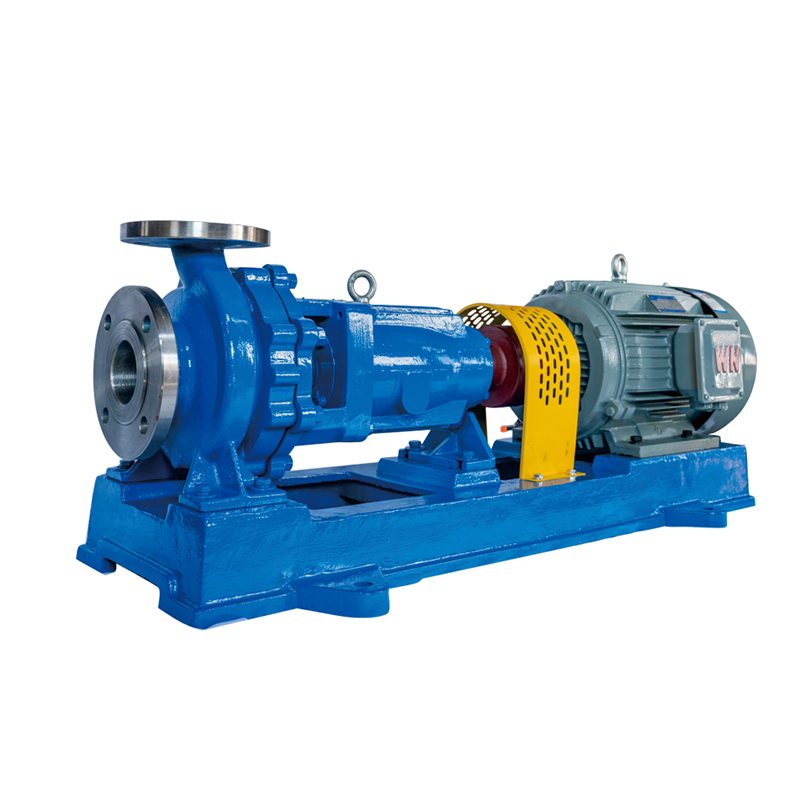
Daily and Weekly Maintenance: The First Line of Defense
The most cost-effective maintenance interventions happen before failure begins. Daily and weekly inspection routines are designed not to fix problems but to detect them at the earliest possible stage — when corrective action is still minor and inexpensive.
Daily Inspection Checklist
- Bearing temperature. Check bearing housing temperatures against baseline readings. A rise of 10–15°C above normal operating temperature warrants investigation. Most rolling element bearings in centrifugal pumps operate reliably below 80°C; sustained operation above this threshold accelerates lubricant degradation and fatigue life consumption.
- Vibration levels. Excessive vibration is the earliest systemic warning of developing faults — including misalignment, impeller imbalance, cavitation, and bearing wear. Operators familiar with their equipment will detect changes in vibration character through sound and tactile feedback before instruments register alarm levels. Where vibration monitors are installed, trend data against baseline rather than reacting to single-reading spikes.
- Mechanical seal condition. Mechanical seals in good condition show no visible fluid leakage at the seal face. A small amount of vapor at the seal face is acceptable for water service, but any visible weeping of process fluid indicates seal face wear or spring fatigue that warrants scheduling replacement before a full seal failure occurs.
- Stuffing box packing. For pumps using compression packing rather than mechanical seals, a controlled leak rate of 40–60 drops per minute is normal and necessary to lubricate the packing rings. A dry stuffing box will overheat and score the shaft sleeve; excessive leakage indicates packing compression is needed.
- Unusual noises. Grinding or crunching sounds indicate bearing wear or solid contamination in the fluid stream. A rhythmic knocking or popping sound — particularly at suction — is a cavitation signature and should prompt immediate review of suction conditions and system head calculations.
- Gland and flange connections. Visually confirm all flange bolts are secure and no process fluid is weeping from gasket joints. Thermal cycling and vibration can progressively loosen fasteners in high-cycle applications.
Weekly Checks
- Lubricant level and condition. For oil-lubricated bearing frames, verify oil level is within the sight glass operating range. Oil that appears milky or cloudy indicates water ingress — a common consequence of seal leakage or condensation in humid environments. Discolored or darkened oil suggests oxidation or thermal degradation and should be changed promptly.
- Suction and discharge pressure. Log operating pressures against the pump's design duty point. A progressive drop in discharge pressure at constant speed indicates wear ring clearance opening up or impeller erosion. Rising suction pressure combined with reduced flow may indicate filter or strainer fouling.
- Motor current draw. Record motor amperage and compare to nameplate and baseline values. Increasing current at constant flow may indicate internal wear increasing hydraulic drag; decreasing current with falling flow may indicate blockage or cavitation.
Monthly and Quarterly Maintenance Procedures
Monthly and quarterly maintenance extends beyond observation to physical inspection and adjustment of components that cannot be adequately assessed through visual and acoustic monitoring alone.
Monthly Procedures
- Coupling inspection. Flexible couplings absorb minor misalignment and thermal expansion between pump and motor shafts. Inspect elastomeric elements or jaw inserts for cracking, compression set, or material loss. Deteriorated coupling elements transmit shock loads directly to bearings and shaft seals, dramatically reducing their service life.
- Lubrication replenishment. For grease-lubricated bearings, apply fresh grease at the specified interval — typically every 500–2,000 operating hours depending on bearing size, speed, and operating temperature. Over-greasing is as damaging as under-greasing: excess grease churns, generates heat, and can force past seals into the pump casing. Always use the grease type specified in the manufacturer's documentation; mixing incompatible grease types can cause consistency breakdown and loss of lubricating film.
- Instrumentation calibration check. Verify that pressure gauges, temperature sensors, and flow meters are reading within expected ranges. A gauge that reads zero on a running pump has not corrected itself — it has failed, and the operating data being recorded is meaningless.
Quarterly Procedures
- Shaft alignment verification. Thermal growth, foundation settling, and pipe strain all cause alignment to drift over time even when the initial installation was correct. Misalignment by as little as 0.05 mm can generate bearing loads that reduce bearing life by 50% or more. Use dial indicators or laser alignment tools to verify both angular and parallel alignment with the pump at operating temperature where possible.
- Oil change for oil-lubricated frames. For new pumps, drain and replace oil after the first 200 hours of operation to flush break-in wear debris. Subsequently, oil should be changed every 2,000 operating hours or every three months, whichever occurs first. Always use the viscosity grade specified for the ambient temperature range of the installation.
- Baseplate and foundation bolt torque check. Vibration gradually loosens foundation bolts. A pump running on a loose baseplate will develop misalignment and excessive vibration within weeks of re-alignment. Check and re-torque all foundation and pump foot bolts to specification.
- Mechanical seal flush plan inspection. If the pump uses a seal flush system — particularly in hot, abrasive, or hazardous fluid applications — inspect flush piping, orifices, and coolers for fouling, scaling, or leaks. A blocked flush orifice starves the seal faces of cooling and lubrication, accelerating face wear and elevating the risk of catastrophic seal failure.
Annual Overhaul: Full Disassembly and Component Inspection
Annual overhaul — or condition-based overhaul triggered by performance degradation — involves full pump disassembly and systematic inspection of every internal component against wear limits specified in the manufacturer's documentation. This is the interval at which latent defects invisible to routine monitoring are identified and corrected before they cause unplanned failure.
| Component | Inspection Standard | Replacement Trigger |
|---|---|---|
| Impeller | Measure vane thickness; inspect for erosion, pitting, and cavitation damage | Vane thickness below minimum; visible pitting; weight imbalance after cleaning |
| Wear rings (casing & impeller) | Measure diametrical clearance with feeler gauge or micrometer | Clearance exceeds twice the original manufactured clearance |
| Shaft and shaft sleeve | Check for straightness (runout), scoring, and corrosion pitting | Runout exceeding 0.05 mm; visible scoring under seal or packing zone |
| Rolling element bearings | Inspect for spalling, pitting, race discoloration, and cage damage | Replace annually as standard practice regardless of visible condition |
| Mechanical seal assembly | Inspect seal faces for chipping, grooving, and flatness; check springs for fatigue | Any visible face damage; replace as complete assembly at annual overhaul |
| Casing and volute | Inspect internal surfaces for erosion, corrosion, and scaling | Wall thickness reduced by 20% or more; visible through-wall pitting |
| O-rings and gaskets | Inspect for compression set, chemical attack, and hardening | Replace as standard at every disassembly regardless of apparent condition |
All dimensional measurements taken during overhaul should be logged and compared to previous overhaul records. Progressive wear trends — a clearance opening by 0.02 mm per year, for example — allow maintenance intervals to be optimized and component life to be predicted rather than discovered at failure.
Special Considerations for Chemical and Corrosive Fluid Applications
Standard centrifugal pump maintenance procedures apply across most applications, but pumps handling corrosive chemicals, abrasive slurries, or high-purity process fluids require additional precautions that reflect the more demanding operating environment.
In chemical processing, material compatibility is not a specification detail — it is a safety requirement. Before any disassembly, verify the fluid has been fully drained and purged, and that the pump casing and internal surfaces have been neutralized if the process fluid is hazardous. Hydrofluoric acid, concentrated sulfuric acid, and chlorinated solvents retained in residual form inside a pump casing represent serious personnel hazards during maintenance.
The IHF single-stage chemical centrifugal pump uses a fluoroplastic-lined flow path that resists attack from most mineral acids, alkalis, and organic solvents. During maintenance, inspect the lining for any signs of crazing, delamination, or impact damage — even minor lining defects can allow process fluid to contact the underlying metal casing, initiating accelerated corrosion that compromises structural integrity without being externally visible.
For highly corrosive acid and alkali service, the FSB fluorine plastic alloy centrifugal pump integrates fluoroplastic wetted components with a metallic structural frame, combining chemical resistance with mechanical strength. Maintenance inspection should include the interface between fluoroplastic components and metal housings — thermal cycling can cause differential expansion that gradually opens micro-gaps at these junctions.
In applications involving particle-laden or abrasive process fluids — including slurry transfer, mining drainage, and wastewater handling — impeller and wear ring erosion rates are substantially higher than in clean fluid service. The UHBZK anti-wear slurry pump is engineered with abrasion-resistant wetted materials, but even reinforced components require more frequent impeller clearance checks — quarterly rather than annual — when handling high-solids-content fluids above 10% by weight.
Stainless steel pumps in food, pharmaceutical, and high-purity chemical applications present a different maintenance consideration: surface contamination. The NH stainless steel centrifugal pump requires periodic passivation of its stainless steel wetted surfaces — particularly after any repair or replacement work that may have introduced free iron contamination from tools or handling. Passivation restores the protective chromium oxide layer that gives stainless steel its corrosion resistance and is essential for maintaining product purity in regulated industries. Explore the complete full centrifugal pump range to match the right material specification to your process fluid and maintenance requirements.
When Maintenance Demands Point to a Design Upgrade
Structured maintenance extends pump service life and reduces operating costs — but there are situations where recurring maintenance demands signal that the correct solution is not better maintenance of the existing design, but a design change that eliminates the failure mode entirely.
The most common trigger for design reconsideration is mechanical seal failure in corrosive or hazardous fluid service. A mechanical seal is a wear component operating at the interface between a rotating shaft and a stationary pump casing. Even with optimal flush systems, correct installation, and regular replacement, mechanical seals in aggressive chemical service will fail — it is a matter of statistical wear, not maintenance inadequacy. Each failure event carries fluid release risk, personnel exposure risk, and environmental compliance risk in addition to the direct cost of parts and labor.
Magnetic drive pumps for seal-free operation eliminate the mechanical seal entirely by coupling the motor to the impeller through a hermetically sealed magnetic circuit rather than a mechanical shaft penetration. There is no rotating shaft exit point, no seal face, and no shaft sleeve — and therefore no seal maintenance interval, no seal flush system, and no seal failure event. For operators managing frequent seal replacements on corrosive chemical lines, the total cost of ownership comparison between a conventionally sealed pump and a magnetic drive alternative often favors the magnetic drive design within two to three maintenance cycles.
The comprehensive guide to magnetic drive pump selection and operation details the engineering principles, application suitability criteria, and operational considerations for magnetic drive technology — including the limitations that make conventional centrifugal pumps the better choice for certain fluid types and temperature ranges.
Centrifugal pump maintenance is a discipline, not a task. It requires consistent scheduling, systematic recording, and the professional judgment to distinguish normal wear from abnormal degradation. Plants that treat maintenance as a structured program — rather than a reactive response to failure — consistently achieve lower lifecycle costs, higher equipment availability, and safer operating environments than those that do not.

 Tel: +86-15256327373
  E-mail:
  Add: Anhui Southern Chemical Pump Co., Ltd. The intersection of Kaicheng Road and Fuxing Road, Jing Country, Xuancheng City, Anhui Province